Topic Hub
Agentic AI: The Complete Coverage Hub
AI that plans, acts, and finishes tasks — how it works, who's building it, and where it breaks.
Agentic AI describes systems that don't just answer questions — they pursue goals. An agent wraps a language model in a loop, gives it tools (web search, code execution, file access, APIs), and lets it decide which tool to use next until a task is finished. That shift, from generating text to taking actions, is the defining change in AI through 2026.
It also changes the risk profile entirely. A chatbot's worst output is a bad paragraph; an agent can send emails, spend money, or delete files. Prompt injection, scope creep, and error propagation are no longer theoretical concerns — they are deployment problems that every company adopting agents has to solve.
This hub collects our reporting on the technology, the companies racing to commercialise it, and the open questions nobody has answered yet.
Last updated July 24, 2026 · 10 articles in this topic
New to this topic?
Start here: What Is Agentic AI? The Complete Guide for 2026
All our coverage








Frequently asked questions
What is agentic AI?
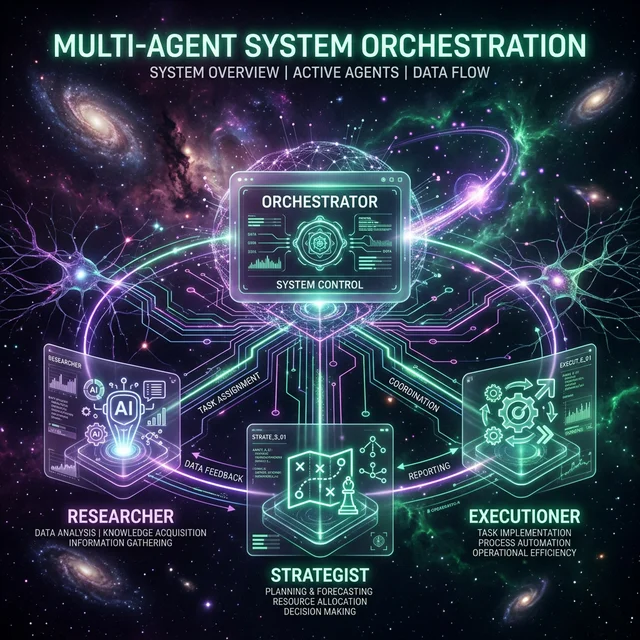
Agentic AI refers to systems that perceive their environment, decide on an action, execute it with tools, observe the result, and repeat until a goal is achieved. Unlike a standard chatbot that returns a single response, an agent runs in a loop and can complete multi-step tasks with little human input.
How is an AI agent different from a chatbot?
A chatbot generates text in response to a prompt. An agent uses a language model as a reasoning engine but adds tools, memory, and a control loop — so it can search the web, run code, call APIs, and take real actions in sequence rather than producing one answer.
What can agentic AI actually do in 2026?
Deployed agents write and debug code across multiple files, conduct multi-step research and produce sourced reports, automate business workflows such as inbox triage and CRM updates, and in some systems operate desktop software directly through screen and keyboard control.
What are the main risks of AI agents?
The four recurring risks are prompt injection (malicious content hijacking an agent's instructions), scope creep (agents taking actions their operators did not intend), error propagation (early mistakes compounding through a multi-step task), and over-permissioning (agents granted more access than any single step requires).
Which companies are leading in agentic AI?
OpenAI, Anthropic, and Google DeepMind lead on frontier models with agentic capabilities, while LangChain/LangGraph, Microsoft's AutoGen, and CrewAI dominate the open frameworks used to build agent systems. Open-weight models from DeepSeek and Moonshot AI are closing the capability gap for self-hosted deployments.