
The Date That Wasn't
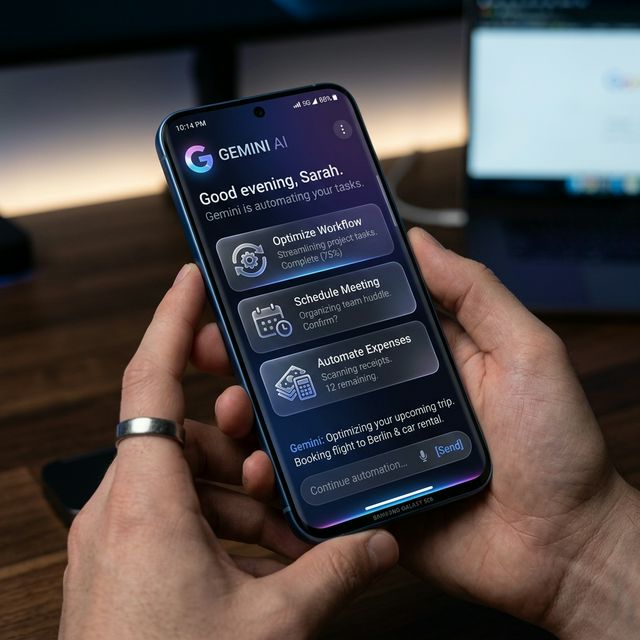
For two weeks, July 17 was the most-circulated date in AI. Reports pointed to it as the general-availability launch of Gemini 3.5 Pro, Google DeepMind's rebuilt frontier model. We covered the reported specifications — the 2-million-token context window, the Deep Think reasoning mode — while noting that none of it carried Google's official confirmation.
That caution proved warranted. July 17 came and went without an official release: no model card, no API documentation, no pricing page, no benchmark publication. As of this writing, Gemini 3.5 Pro is not generally available, and Google has still not confirmed the launch date it never actually announced.
What Google Has Actually Said
The confirmed record is thin but real. At I/O 2026, Google said Gemini 3.5 Pro exists, is being used internally with encouraging results, and will roll out after Gemini 3.5 Flash. Everything else — the July 17 date, the 2M context window, the reported $15/$60 per-million-token pricing, the $250-a-month Ultra gating for Deep Think — traces to third-party reporting and unnamed sources, much of it circular, pointing back to the same handful of leaks.
The most substantive reporting concerns why the model is late: DeepMind engineers reportedly scrapped the original base model after finding structural failures in recursive tool-calling and SVG generation, opting for a fresh pretraining run rather than shipping a compromised flagship. If true, it's the right engineering call — and a reminder that the era of models too complex to patch is here.
The Race Didn't Pause
Google's competitors used the gap. OpenAI's GPT-5.6 Sol tier went public on July 9 — the same day xAI opened Grok 4.5 to the public. Anthropic's Fable 5 continues its rollout. Dueling leaks capture the stakes: one claimed an unreleased Gemini model produced cleaner front-end code than its rivals in arena testing; another claimed it trails both GPT-5.6 and Fable 5 on reasoning benchmarks. Both cannot be true, and neither is verifiable until Google ships.
The deeper dynamic: Google is the only frontier lab whose flagship model of this generation remains unreleased. Its integration moat — Search, Workspace, Android — buys patience, but every week of silence cedes developer mindshare to APIs that exist.
What to Watch
Three signals will matter more than any leak. An official model card — the moment one appears, every reported spec becomes checkable. Independent long-context benchmarks — a 2M-token window is only meaningful if the model genuinely reasons across it rather than losing the middle. And pricing — if the reported premium holds, Google is positioning 3.5 Pro as a statement product, not a volume play.
Until then, the honest summary of the biggest AI launch of the summer is one sentence: it hasn't happened yet.

















































Commenting is currently unavailable on this article.