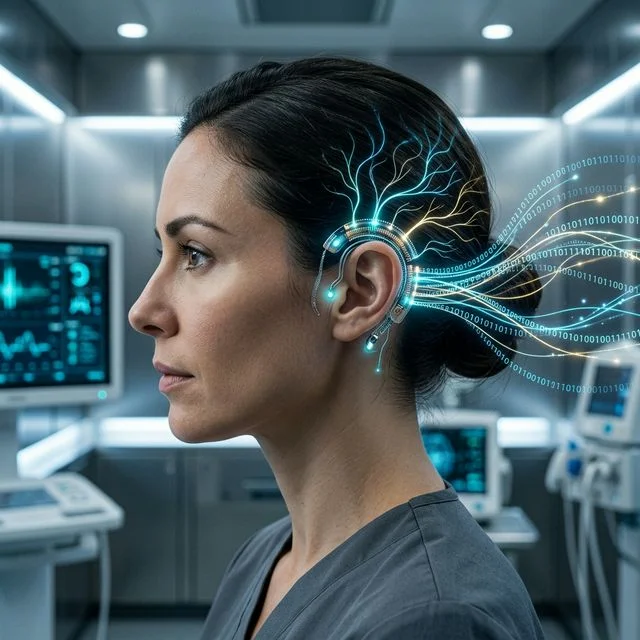
The Precision Era of BCI
Neuralink has officially unveiled its newest generation of Brain-Computer Interface (BCI) technology, marking a seismic shift in how humans interact with digital systems. The latest 'Link' implant features ultra-fine threads with double the electrode density, allowing for a 1,000% increase in data transfer between the human motor cortex and external devices. Early clinical trials have shown patients controlling complex robotic arms with the same fluidity and speed as a biological limb.
Beyond Motor Control
What makes the 2026 update revolutionary is the inclusion of 'Bi-Directional Sensing.' The device doesn't just read signals from the brain; it can now send subtle sensory feedback back to the user. This means a user could 'feel' the texture of a virtual object or receive tactile alerts directly to their consciousness. "We are moving from a remote control to a seamless expansion of the self," the Neuralink engineering team stated during their latest update.
Ethics and Safety
With increased throughput comes increased responsibility. Neuralink has emphasized their new 'Privacy Shield' architecture, which uses on-chip encryption to ensure that neural data is processed locally before being transmitted to any external device. As BCI technology moves closer to consumer availability, these safety features are becoming the primary focus for regulators and the general public alike.
Where Neuralink Is in 2026
Neuralink's PRIME study — first-in-human clinical trial of its N1 implant — has data from multiple participants. The first participant (Noland Arbaugh, implanted January 2024) demonstrated the core capability: controlling a computer cursor by thought alone, enabling gaming, web browsing, and typing despite quadriplegia. Follow-up reports noted some electrode connections degraded over the first months as the brain adapted.
As of mid-2026, additional PRIME participants have been implanted. No complete clinical trial results have been published in peer-reviewed journals — current evidence is Neuralink's own presentations and participant accounts.
The N1 Implant
The N1 implant is 23mm in diameter, inserted into the motor cortex, containing 1,024 electrodes on 64 flexible threads thinner than a human hair. The surgical robot (R1) places threads precisely to avoid blood vessels in approximately 25 minutes. A custom chip processes signals wirelessly to an external device.
Current capabilities: high-bandwidth decoding of motor intention signals enabling cursor control and virtual keyboard use at speeds approaching eye-tracking assistive technology.
Competing BCI Programmes
Neuralink is not alone in the field. Synchron (with backing from Jeff Bezos and Bill Gates) has implanted its Stentrode device in patients in the US and Australia through a less invasive endovascular approach. Blackrock Neurotech has the longest-running human BCI data, with some implants functioning for over 10 years. Academic programmes at BrainGate have conducted decades of foundational research. Each approach has different trade-offs between invasiveness, electrode count, and longevity.
What BCI Technology Will Require to Reach Scale
Beyond the current paralysis and ALS applications, BCIs face three prerequisites for broader medical adoption: regulatory clearance for specific indications (FDA clearance for motor function restoration is the nearest milestone), long-term implant safety data (current studies run 12–24 months; regulators will want 5+ year data before broader clearance), and a reimbursement pathway (insurance coverage determines whether most patients can access the technology regardless of regulatory approval). The technology is advancing; the clinical and regulatory path is predictably long. Realistic timeline for meaningful patient volume beyond research trials: 2028–2032.




























































Commenting is currently unavailable on this article.