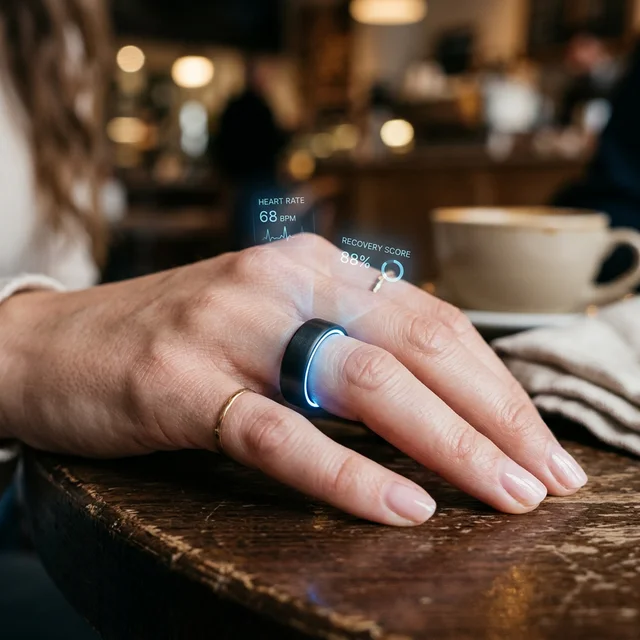
The Death of the Smartwatch?
While smartwatches have dominated our wrists for a decade, 2026 marks the official tipping point for the Smart Ring. As of March 18, adoption rates have surged by 49%, driven by the launch of ultra-refined models that offer clinical-grade health monitoring in a device no larger than a wedding band. We are moving away from active notifications towards 'Ambient Intelligence'—technology that monitors us silently and only speaks when it truly matters.
Predictive Wellness, Not Reactive Tracking
What sets the 2026 generation of rings apart is their focus on Predictive Intelligence. Utilizing advanced sensors that measure cortisol levels, blood glucose, and hydration, these rings don't just tell you how you slept; they predict your burnout risk for the upcoming week. By analyzing subtle biomarkers through 'Always-On' logic, the new Galaxy Ring 3 and Apple Ring Pro are becoming the primary gatekeepers of personal wellness.
The Future: Biometric Sovereignty
Beyond health, smart rings are evolving into the ultimate universal key. With integrated ultra-wideband (UWB) chips, they are replacing digital wallets and physical keys. Your ring unlocks your car, authorizes secure transactions with a simple gesture, and even transmits your secure digital identity to smart city checkpoints. The era of carrying devices is ending; the era of wearing your intelligence has arrived.
What Mainstream Means for Smart Rings
Smart rings are mainstream in the sense that Samsung, Google, and Amazon have launched or announced products in the category and retail availability is broad. They are not mainstream in terms of universal adoption — global annual unit sales are approximately 8–10 million, comparable to high-end smartwatch sales but far below smartphone volumes.
Samsung Galaxy Ring's July 2024 launch drove the category to mainstream recognition. Before Samsung's entry, Oura was the only brand with meaningful consumer recognition outside tech-enthusiast circles.
The Primary Use Case: Sleep
What smart rings offer that smartwatches struggle with is comfortable, overnight biometric monitoring. Wearing a smartwatch to sleep is uncomfortable for many users; ring battery life (7–14 days) outlasts most smartwatch 24-hour cycles with always-on monitoring. Sleep data — resting heart rate, HRV, SpO2, skin temperature, sleep stages — is the primary purchase driver.
The Capability Gap to Close
All ring makers are working to add blood pressure monitoring. Continuous BP data from a ring would be clinically significant. Samsung has filed patents; Oura has academic medical centre research partnerships. FDA clearance for a medical-grade blood pressure ring would significantly expand clinical utility and addressable market.
The Missing Player: Apple
Apple has filed extensive smart ring patents but has not announced a product. If Apple enters — likely alongside a health monitoring narrative that would connect to its broader health strategy — it would dramatically expand mainstream awareness. The Apple Watch showed how a major consumer brand entering a niche wearable category can accelerate total market growth beyond just that brand's own sales.
Buying Guidance
For consumers considering a smart ring in 2026: the Samsung Galaxy Ring (starting at $399) offers the best integration for Android/Samsung ecosystem users. Oura Ring 4 ($349 + $6/month subscription) has the deepest sleep tracking analytics and the longest established health research partnerships. RingConn ($279, no subscription) is the best value option for users who want the core tracking without ongoing subscription costs. Apple users should be aware that Samsung Galaxy Ring does not support iOS; Oura and RingConn both support iOS. If battery life and sleep tracking are the primary priorities, any of the three will serve you well — the differences are in software depth rather than core sensor capability.























































Commenting is currently unavailable on this article.