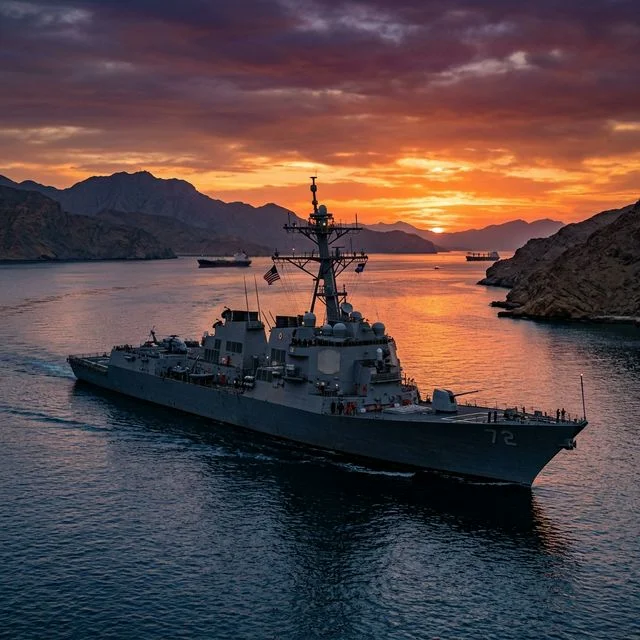
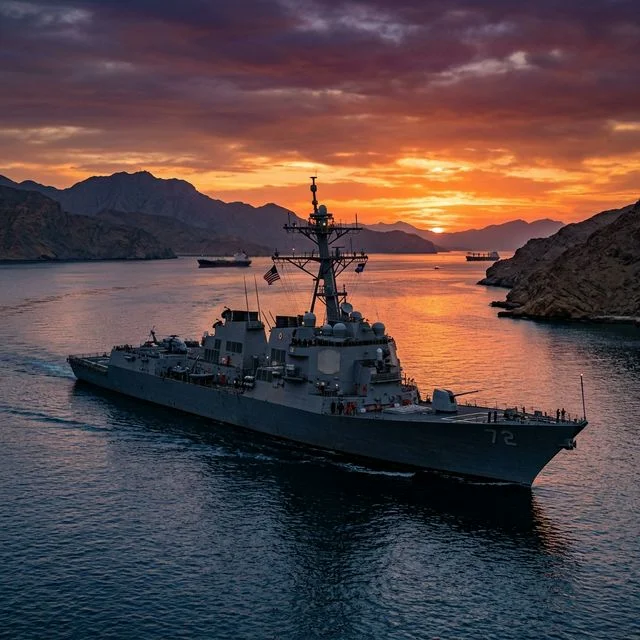
What Happened
Iran's Islamic Revolutionary Guard Corps said its navy and aerospace forces launched joint missile and drone operations targeting US military sites in Kuwait and Bahrain, describing it as a response to recent US strikes inside Iran. Iran has warned that any further violation of the existing ceasefire framework would result in a complete halt to all diplomatic processes underway.
How the Cycle Escalated
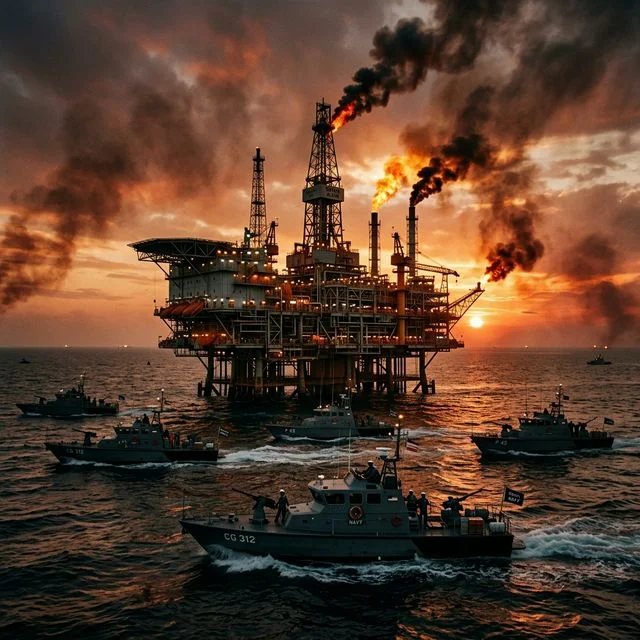
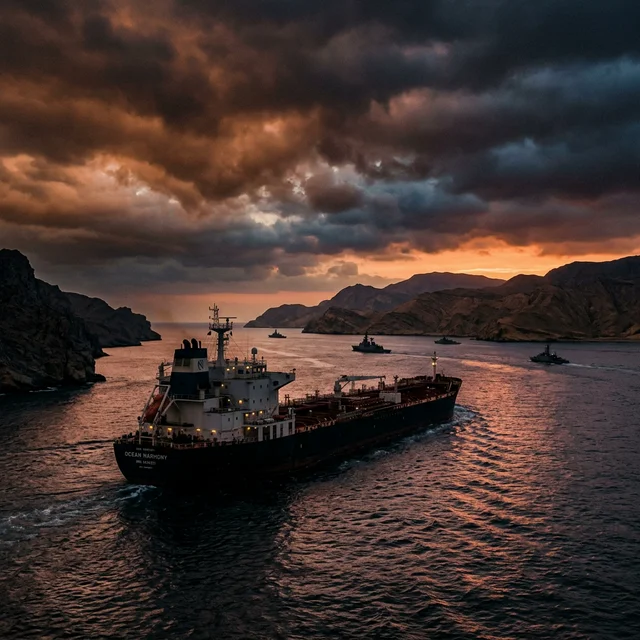
This exchange is the latest turn in a weeks-long cycle of strikes and counter-strikes centred on the Strait of Hormuz. It traces back to a US attack on Iranian ports and naval assets in mid-May 2026, which was itself a response to Iranian seizures of commercial tankers in late April. The cycle has followed a consistent pattern: each side characterises its most recent strike as a proportionate response to the other's "ceasefire violation," while continuing to escalate the targets and weapons systems involved.
The Geography: Why Bahrain and Kuwait
The targeting of Bahrain and Kuwait is strategically significant. Bahrain hosts the US Navy's Fifth Fleet — the primary naval force projection command for the Middle East region. The Fifth Fleet operates roughly 20 warships in the Gulf at any given time, including carrier strike groups and mine countermeasures vessels specifically positioned for Strait of Hormuz operations. Bahrain's Al Asfour naval base is the logistical anchor of US maritime presence in the Gulf.
Kuwait hosts Camp Arifjan, one of the largest US Army forward operating bases in the region, with a significant logistics and prepositioned equipment function. Strikes on Bahrain and Kuwait therefore simultaneously threaten US naval command and land-based logistics — a dual signal about Iran's reach and willingness to escalate geographically.
Gulf State Responses
Saudi Arabia, the UAE, and Qatar — the other major Gulf states — have been in an increasingly difficult position as the Iran-US conflict has intensified. All three host significant US military assets and have treaty-like defence relationships with Washington. None has publicly supported Iran's strikes.
However, all three have also maintained diplomatic back-channels with Iran and none wants the conflict to escalate to the point where their own territories become targets. Saudi Arabia's oil infrastructure remains Iran's most feared potential retaliatory target — a strike on Aramco's Abqaiq processing facility would be catastrophic for global oil supply. Riyadh has been consistently pushing for de-escalation through multiple intermediaries.
Qatar has been particularly active as a channel for indirect communications between Washington and Tehran. Qatar hosts the Al Udeid Air Base (the largest US air base in the Middle East) while simultaneously maintaining one of the Gulf's more functional relationships with Iran.
Impact on Oil and Shipping
Brent crude has been trading in a volatile range of approximately $105–$125 since the Strait of Hormuz tensions began in April. The strikes on Bahrain and Kuwait pushed Brent above $118 in the immediate aftermath, though prices pulled back as markets assessed that the strikes did not directly affect oil production or export infrastructure.
The more persistent impact has been on shipping insurance. War risk premiums for vessels transiting the Strait of Hormuz have risen approximately 400% since January 2026. Several major shipping lines — including Maersk and CMA CGM — have suspended or rerouted Gulf transits, adding 10–14 days to voyages between Asia and Europe by routing around the Cape of Good Hope rather than through the Suez Canal.
Roughly 20% of global oil trade and 18% of global LNG supply transits the Strait of Hormuz. Even partial disruption has cascading effects on energy prices across Europe and Asia.
Where Diplomacy Stands
A UN-brokered ceasefire framework has been in place since late April, though both sides have accused the other of violating it. The framework does not include a formal verification mechanism — there is no international observer force monitoring compliance — which makes mutual accusations of violation difficult to adjudicate independently.
Backchannel talks involving Qatari, Omani, and Swiss mediators have continued through the military escalations. Iran's foreign ministry has stated it remains willing to return to formal negotiations but only if the US halts all strikes on Iranian territory. The US has not agreed to that precondition.
What the Next Escalation Step Looks Like
Military analysts tracking the conflict have noted that neither side has yet directly struck the other's oil production or export infrastructure — the most economically consequential step available to both. Iran could target Saudi Aramco facilities or UAE oil terminals. The US could target Iran's Kharg Island oil terminal, which handles roughly 90% of Iran's oil exports. Both sides appear to have assessed that this step would cross a threshold that produces consequences neither currently wants.
The stability of that mutual deterrence is not guaranteed as the conflict continues.
The Bottom Line
The strikes on Bahrain and Kuwait represent Iran demonstrating that its retaliatory reach extends beyond its own immediate geography and into the core infrastructure of the US regional military presence. Whether this represents a deliberate escalation designed to force a negotiated settlement or simply the next step in a cycle that neither side fully controls is genuinely unclear. What is clear is that the costs — to Gulf commerce, shipping insurance, oil prices, and regional stability — are accumulating faster than any diplomatic mechanism is currently moving. The next few weeks of backchannel diplomacy, mediated through Qatar and Oman, will determine whether the conflict shifts toward negotiation or toward its next escalatory threshold.




































































Commenting is currently unavailable on this article.