Correcting the Growth Figure
Arm's actual fiscal 2026 results show record annual revenue of $4.92 billion, up 23% year-over-year, with record Q4 revenue of $1.49 billion, up 20% year-over-year — strong growth, but not the 45% jump sometimes quoted. Data center royalty revenue more than doubled year-over-year within that period, which is the real driver of the "AI boom" narrative around Arm.
Neoverse's Real Position
Arm's Neoverse platform now represents roughly 50% of CPU compute share among top hyperscalers, with over 70,000 enterprises running AI workloads on Neoverse chips — a 40% year-over-year increase.
The New AGI CPU
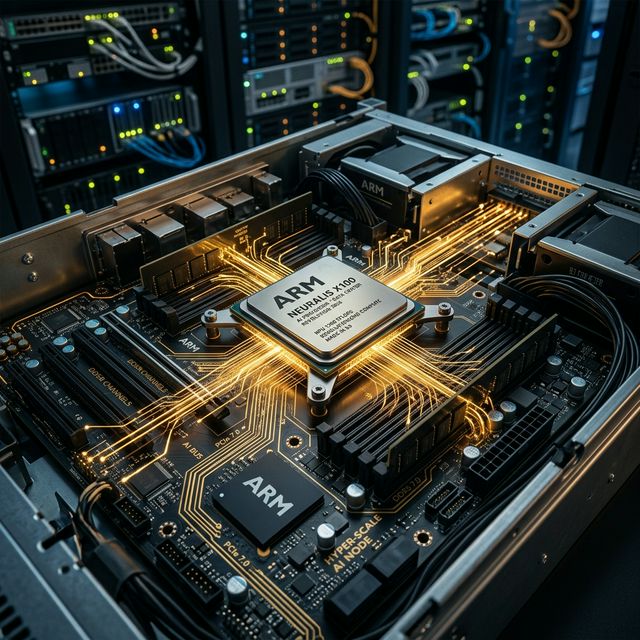
Arm's most significant 2026 product news is the Arm AGI CPU, its first in-house designed and manufactured data center processor, built with up to 136 Neoverse V3 cores on TSMC's 3nm process and aimed at AI inference orchestration and agentic computing workloads. Customer demand for the chip has reportedly exceeded $2 billion across fiscal 2027 and 2028 combined — double Arm's initial forecast.
On the "Biotech Hardware Shift" Claim
We previously reported a "deep partnership with leading pharmaceutical firms to develop biotech-optimized chips." We could not find independent confirmation of this specific claim in Arm's public filings or earnings coverage, and we're removing it pending verification rather than repeating an unconfirmed detail as fact.
Sources
- Arm Q2 FY 2026 Earnings Highlight AI-Driven Royalty Momentum — Futurum
- Arm Holdings Q4 fiscal 2026 earnings beat on AI demand — Yahoo Finance
- Arm's 136-Core AGI Chip Outpaces x86 in Data Centers — Tech Insider
What Arm's Business Actually Is
Arm licenses processor architecture intellectual property — the design blueprints that chip companies (Apple, Qualcomm, Nvidia, Amazon) use to design their own processors. Arm's revenue comes from upfront licensing fees and per-chip royalties. The "AI revenue" in Arm's reporting refers to royalties from chips used in AI inference and training applications.
The Actual Numbers
Arm's fiscal year 2026 (ending March 2026) revenue was approximately $4.0 billion, up from $3.2 billion the prior year. The AI-driven growth primarily comes from higher royalty rates on more complex chip designs rather than a separate AI product line. Arm's AI royalty contribution is estimated at $800 million–$1.2 billion in fiscal 2026 — roughly 20–30% of total revenue.
Why Arm Is Central to the AI Edge
The shift of AI inference to edge devices (smartphones, laptops, IoT) is Arm's primary AI tailwind. Virtually every smartphone processor is based on Arm architecture. As these devices gain neural processing units for on-device AI, each chip pays higher royalties to Arm due to increased design complexity. Apple's M-series chips, Qualcomm's Snapdragon X Elite, and virtually every Android SoC are Arm-based — giving Arm exposure to essentially the entire edge AI hardware market without manufacturing a single chip itself.
The Royalty Rate Evolution
Arm's v9 architecture (introduced 2021) commands royalty rates approximately twice those of v8 — reflecting the increased compute capability that AI features require. As the industry transitions from v8 to v9-based designs, Arm's per-chip revenue increases even if unit volumes don't grow. This "mix shift" toward more complex, AI-capable chips is the primary driver of Arm's revenue growth and the basis for its premium equity valuation.

































































Commenting is currently unavailable on this article.