Practical Quantum Supremacy
For decades, quantum computing was a science fiction promise wrapped in cryogenic refrigeration. Headlines regularly reported laboratory breakthroughs, but when corporations asked how to use them, the answer was always the same: wait. The qubits were too noisy, errors accumulated too fast, and the machines were too small to outperform a high-end classical supercomputer.
In 2026, that waiting period is officially over. The installation of the first commercial 1,000-qubit quantum computing cluster marks the transition of quantum technology from research labs into the commercial market, offering practical tools for chemical engineering and cryptographic testing.
Breaking the Noise Barrier
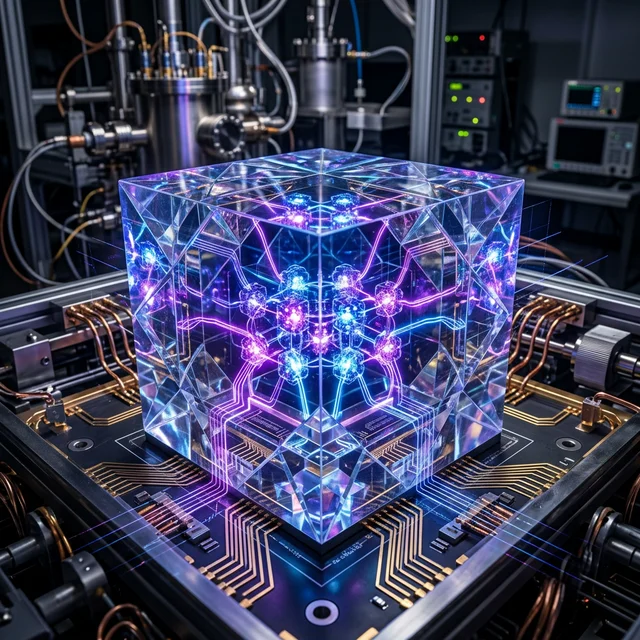
The true achievement of this new 1,000-qubit cluster is not just the physical count of superconducting circuits. It is the implementation of Logical Qubits with active error correction.
In quantum mechanics, physical qubits are extremely sensitive. A tiny change in temperature or magnetic fields causes "decoherence," destroying the calculations. To solve this, developers group multiple physical qubits together to form a single "logical qubit" that can detect and correct errors in real-time.
By achieving a logical error rate of less than 0.01%, this cluster can run deep quantum algorithms containing thousands of consecutive gates without failing.
Industrial Applications: Materials and Molecules
Now that these machines are accessible via cloud instances, early commercial partners are focusing on molecular simulations.
Classical supercomputers struggle to simulate molecules because the complexity grows exponentially with every electron. A 1,000-qubit quantum computer can easily map these interactions.
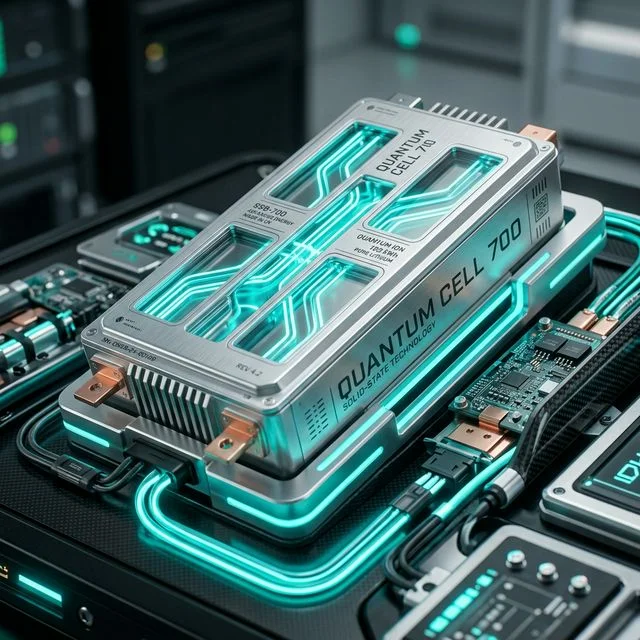
- Battery Chemistries: Researchers are using the cluster to simulate new solid-state battery electrolytes, aiming to double energy densities.
- Nitrogen Fixation: The chemical industry is testing catalysts to optimize the Haber-Bosch process, which accounts for nearly 2% of global energy consumption.
The Security Imperative
The deployment of a commercial-grade 1,000-qubit computer has also triggered an urgent push in cybersecurity. While this machine is not yet large enough to break RSA-2048 encryption, it proves that the timeline for the "Quantum Threat" is shorter than previously estimated.
Governments and financial institutions are accelerating their transition to post-quantum cryptography (PQC) algorithms recently approved by NIST. The quantum era has begun, and the race to secure the digital world before these systems scale further is officially underway.


























































Commenting is currently unavailable on this article.