What Claude Science Actually Is
Anthropic launched Claude Science on June 30, 2026, positioning it as a dedicated research environment built atop Claude's existing models. The platform integrates more than 60 scientific databases spanning genomics, proteomics, and cheminformatics into a single workspace, giving pharmaceutical researchers and academic scientists a way to query and cross-reference scientific data at a scale that would be impractical with traditional tools. Early customers include BioNTech, Pfizer's oncology division, and several large academic medical centres.
How AI Drug Discovery Actually Works
Traditional drug discovery follows a well-known bottleneck: researchers must screen millions of potential molecular candidates to find a handful worth advancing through clinical trials, a process that typically takes 12–15 years and costs more than $2 billion per approved drug. AI accelerates the earliest part of that pipeline.
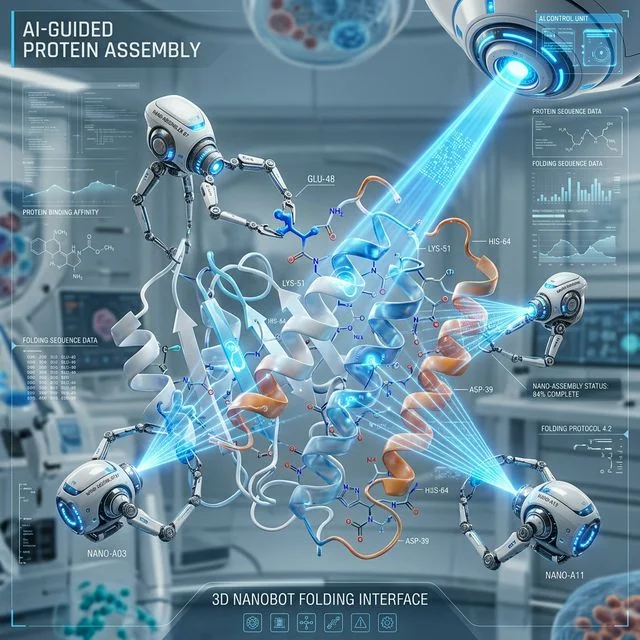
The core technique is structure prediction — figuring out how a protein folds, which determines how potential drug molecules can bind to it. Google DeepMind's AlphaFold (and its successor AlphaFold 3, released in 2024) solved the protein-folding prediction problem for most known proteins. What platforms like Claude Science are now doing is the next step: using large language models trained on scientific literature and molecular data to suggest which candidates are most likely to bind effectively, flag potential toxicity early, and accelerate the synthesis planning process.
Claude Science adds a natural-language layer that lets a researcher phrase a question like "what existing approved compounds structurally resemble the binding site of KRAS G12C?" and receive a structured analysis rather than a raw database dump.
The Competitive Landscape
Anthropic is entering a crowded field:
Google DeepMind's Isomorphic Labs — spun out from DeepMind in 2021 — is probably the best-resourced pure-play AI drug discovery operation. It has AlphaFold 3 as its core protein structure engine and has published results on several target classes. DeepMind announced partnerships with Eli Lilly and Novartis in 2023 worth over $3 billion combined.
Recursion Pharmaceuticals is a publicly listed company that combines high-throughput biological experiments with machine learning to map how cells respond to drug candidates at scale.
Insilico Medicine filed the first fully AI-designed drug for clinical trials in 2023 — a lung fibrosis compound — and has since expanded its pipeline.
Exscientia, acquired by Recursion in 2024, contributed additional clinical-stage AI-designed compounds.
What distinguishes Claude Science is not primarily its computational biology capability — it isn't claiming to out-predict AlphaFold on protein structures. Instead, Anthropic is betting on the research productivity layer: making it faster for scientists to navigate, synthesise, and act on what is already known across dozens of data sources.
The Neglected Disease Programs
The aspect of Claude Science that has drawn the most external attention is Anthropic's announcement that it would run its own internal drug discovery programs for neglected diseases — conditions like leishmaniasis, Chagas disease, and certain drug-resistant tuberculosis strains that affect predominantly low-income populations and receive minimal commercial R&D investment.
Anthropic has been explicit that these programs are not primarily a revenue play. The company has said it intends to make any discovered compounds available for generic manufacture. Whether this model is sustainable long-term or is primarily a reputational signal ahead of IPO preparations is a fair question — but the science is real, and the diseases targeted represent genuine unmet medical need.
Pricing and Access
Claude Science is priced as an enterprise product. Anthropic has not published a public pricing schedule, but analysts covering the company estimate annual per-seat licensing in the range of $50,000–$120,000 for research organisation access. Academic discounts are available. A public API with pay-per-use access is planned for late 2026.
What the Market Thinks
Pharmaceutical companies have been cautious about AI drug discovery partnerships before — several high-profile partnerships in the 2018–2022 wave produced disappointing clinical results when early-stage AI hits failed to translate in human trials. The field has learned from those failures: the current generation of tools is deployed earlier in the pipeline, with more modest claims about clinical success prediction.
Claude Science is entering at a moment when the scepticism has moderated, the tools are better, and the pressure from competition has increased. The question for Anthropic is whether a language model company can build the domain-specific credibility that pure-play biology AI firms have spent years accumulating.
The Bottom Line
Claude Science represents a credible bet on a specific niche: research productivity for scientists who need to synthesise information across dozens of databases, not a direct assault on AlphaFold or Recursion's phenomics platforms. If Anthropic can demonstrate that its platform meaningfully compresses the time from hypothesis to candidate selection, the addressable market is enormous — global pharmaceutical R&D spending exceeds $250 billion annually. The neglected disease programs add a layer of reputational credibility that commercial drug companies find difficult to replicate. Whether the platform delivers on its clinical promise is a question that will take years, not quarters, to answer.
Key Numbers
Claude Science launched June 30, 2026. The platform integrates more than 60 scientific databases. Launch partners include BioNTech and Pfizer's oncology division. Estimated enterprise pricing: $50,000–$120,000 per seat annually (analyst estimates; Anthropic has not published public pricing). Anthropic's internal neglected disease programs target three initial indications: visceral leishmaniasis, Chagas disease, and drug-resistant tuberculosis. Competing AI drug discovery platforms with active clinical-stage programs: Recursion Pharmaceuticals, Insilico Medicine, Exscientia (now part of Recursion), Google DeepMind's Isomorphic Labs.
Is the drug discovery AI bubble real? Several high-profile AI drug discovery partnerships in 2018–2022 failed to deliver clinical results. The current consensus among pharmaceutical R&D leaders is that AI tools are most reliable for target identification and lead optimization — earlier in the pipeline — and that clinical prediction remains genuinely hard. Claude Science is positioning itself primarily in that earlier, more tractable space.



















































Commenting is currently unavailable on this article.