
US spot Bitcoin ETFs recorded $221.7 million in net inflows on July 10, 2026 — their largest single-day total in two months — ending a 10-consecutive-day outflow streak that had pressured Bitcoin prices through much of late June and early July. The inflow reversal, combined with broader risk appetite returning to markets, pushed Bitcoin to approximately $63,184 as of Friday morning and Ethereum to $1,795.
What Broke the Outflow Streak
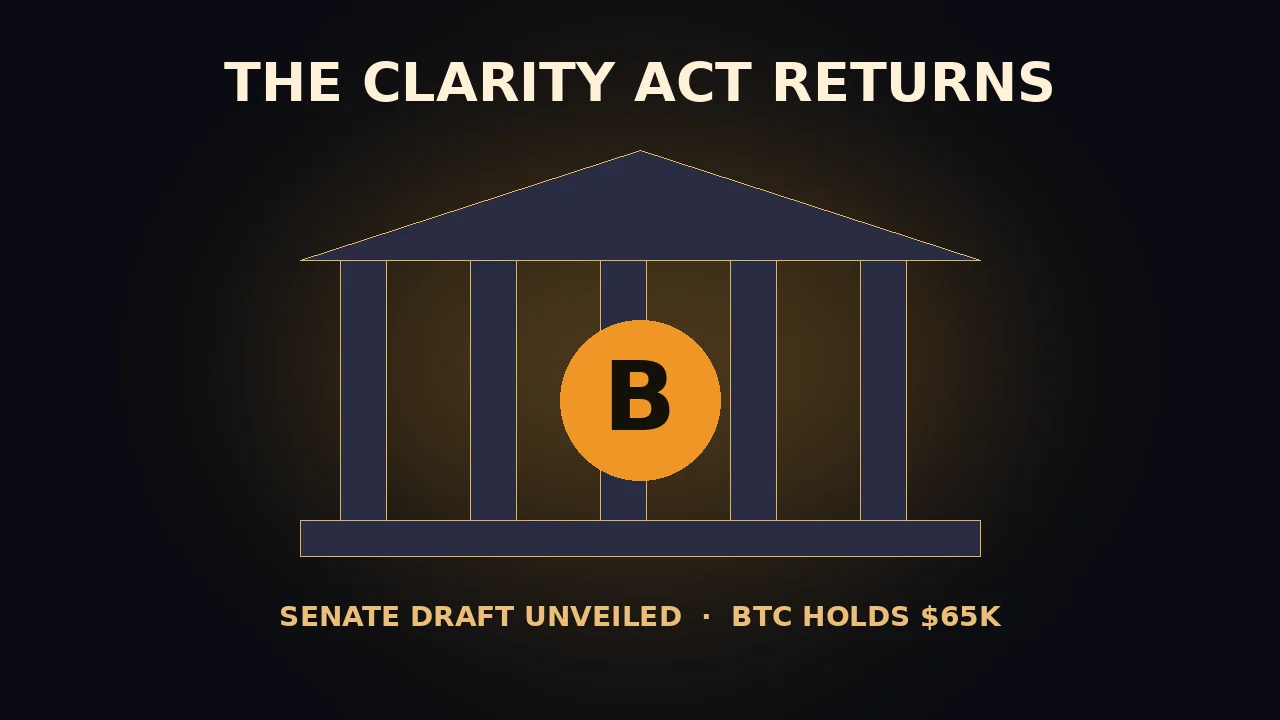
Three factors converged to reverse the trend. First, the crypto Clarity Act — legislation that would establish a comprehensive regulatory framework for digital assets — was reported to be on track for a late-July vote, with a revised draft expected imminently. Regulatory clarity removes a major overhang for institutional allocators who have been reluctant to increase ETF exposure with the legal framework unresolved.
Second, Bitcoin and Ethereum demonstrated relative resilience during escalating Middle East tensions in the first week of July, when US-Iran strikes caused a sharp but brief price dip. The recovery from that dip, and crypto's comparative stability versus other risk assets during the geopolitical volatility, reinforced the emerging narrative among institutional investors that Bitcoin has genuine portfolio diversification properties.
Third, TeraWulf — a bitcoin mining and data centre company — announced a 20-year AI data centre partnership with Anthropic, projected to generate $19 billion in revenue. The deal highlighted crypto infrastructure companies' pivot toward AI data centre hosting, a narrative that has attracted crossover interest from both crypto and tech investors.
The CLARITY Act: Status and Sticking Points
The CLARITY Act is designed to resolve the central ambiguity that has plagued US crypto regulation: whether digital assets are securities (regulated by the SEC) or commodities (regulated by the CFTC). The legislation would classify most cryptocurrencies as commodities and move regulatory primacy to the CFTC for major tokens including Bitcoin and Ethereum, while maintaining SEC authority over tokens that function like investment contracts.
The bill still lacks full bipartisan buy-in, with several Democratic senators expressing concerns about consumer protection provisions and stablecoin oversight. Proponents are pushing for a floor vote before Congress goes to recess in late July, creating a compressed timeline. If the vote slips to after recess, the next realistic window is September — which markets would likely treat as a negative catalyst for crypto sentiment.
Bitcoin Price Context
At $63,184 on Friday July 10, Bitcoin remains approximately 12% below its July 2026 peak of approximately $71,500 reached in early July. The pullback coincided with profit-taking after the $64,000 recovery from the Iran-related dip and broader risk-off sentiment in equity markets related to AI infrastructure valuation concerns.
Ethereum's recovery has been weaker — at $1,795, ETH is approximately 8% off its recent peak, reflecting ongoing concerns about fee revenue compression from L2 migration. The upcoming Ethereum Prague upgrade, expected in Q3 2026, is expected to reduce blob fees further, which analysts view as structurally positive for L2 growth but negative for base-layer validator revenue in the near term.
What the Inflow Recovery Means
A single day of strong inflows does not confirm a trend reversal — the 10-day outflow streak itself was preceded by strong inflow days. The more meaningful signal to watch is whether institutional flows sustain into the following week. If the CLARITY Act draft lands with bipartisan momentum, the combination of regulatory clarity and strong ETF flow data could provide the catalyst for Bitcoin to re-test its 2026 peak levels. If the bill again stalls, markets should expect renewed institutional caution.
Institutional Flows: Reading the Detail
The $221.7 million headline figure masks important composition data. BlackRock's iShares Bitcoin Trust (IBIT) accounted for approximately $180 million of the day's inflows — roughly 81% of the total — with Fidelity's Wise Origin Bitcoin Fund (FBTC) adding most of the remainder. Smaller ETFs from Invesco, VanEck, and Bitwise saw minimal net activity. This concentration matters: when IBIT dominates inflow days, it reflects institutional and wealth management allocations rather than retail buying, which is a more durable signal for sustained price support.
The 10-day outflow streak that preceded the reversal was itself notable. Net outflows during that period totalled approximately $890 million — a significant withdrawal that kept Bitcoin suppressed in the $60,000–$62,000 range while broader risk assets showed stronger performance. The break in that streak, particularly led by IBIT, suggests that at least some institutional allocators view the $62,000–$63,000 level as an attractive re-entry point.
The TeraWulf-Anthropic Deal: Why It Matters for Crypto
The $19 billion, 20-year data centre partnership between TeraWulf and Anthropic deserves attention beyond its headline number. TeraWulf operates nuclear-powered Bitcoin mining facilities, and the deal involves converting a portion of that infrastructure to AI data centre use — a pivot that reflects a broader strategic shift in the crypto mining industry.
Bitcoin mining economics have been under sustained pressure since the April 2024 halving reduced block rewards from 6.25 BTC to 3.125 BTC. Miners with low-cost, clean power infrastructure have found that AI data centre hosting — which commands higher and more stable margins than mining revenue — is a superior use of their capital. The TeraWulf-Anthropic deal is the largest transaction yet in this trend, and it signals that hyperscale AI companies are willing to enter long-duration contracts with crypto-native infrastructure operators, validating the business model for the sector.
For crypto markets, the deal is constructive in two ways: it demonstrates that Bitcoin mining infrastructure has real-world asset value beyond the mining revenue itself, and it brings Anthropic — one of the most prominent AI companies — into a direct commercial relationship with the crypto industry, reducing the perception of crypto as isolated from mainstream technology investment flows.
What Needs to Happen for a New ATH
Bitcoin's all-time high from its January 2026 peak stands at approximately $109,000 — a level that now seems distant from the current $63,000 range. For Bitcoin to mount a credible challenge to that level in the second half of 2026, three conditions need to align: regulatory clarity (the CLARITY Act or equivalent), sustained institutional ETF inflows over multiple weeks, and a broader risk-on macro environment driven by Federal Reserve rate cuts or stable inflation data.
The Fed's next meeting in late July will be watched closely. Market expectations for a rate cut have been fluctuating between 30% and 55% probability across the summer. A confirmed cut, or clear signals of a September cut, would be a meaningful catalyst for crypto alongside other risk assets. In that environment, the CLARITY Act passing before recess and sustained ETF inflows could provide the conditions for a meaningful price recovery toward the $75,000–$80,000 range by year-end 2026, according to several crypto research desks.








































































Commenting is currently unavailable on this article.