
A Leader Killed in Wartime
Ayatollah Ali Khamenei, Iran's Supreme Leader of 34 years, was killed on February 28, 2026, in a joint US-Israeli airstrike on his compound. He was 86. His daughter, son-in-law, daughter-in-law, and grandchild were also killed in the strike. The assassination took place in the early weeks of the 2026 Iran conflict and represented the most dramatic single act of the war: the direct killing of a sitting head of state and supreme religious authority by foreign military action.
The Funeral's Scale
The state funeral that began July 3 in Tehran is expected to become the largest state funeral in recorded history by participation. Iranian officials put the expected attendance at 20 million, a figure that includes mourners travelling from across Iran's provinces and from Shia communities in Iraq, Lebanon, and Pakistan. Similar crowds accompanied the funeral of Qasem Soleimani in January 2020, which Iranian state media estimated at between 3 and 7 million in Ahvaz and Tehran combined. The Khamenei funeral is projected to dwarf that.
Over 100 countries sent official delegations to Tehran. Notable absences included the United States, Israel, the United Kingdom, and most of Western Europe. Russia, China, and Turkey sent senior representatives. The leaders of Hamas, Hezbollah's political wing, and Iraq's Hashd al-Shaabi militias attended in person.
The Succession Question
Iran's constitution gives the Assembly of Experts — an 88-member clerical body — the authority to select a new Supreme Leader. The assembly convened in emergency session after Khamenei's killing and has been in confidential deliberations since. As of the funeral, no successor had been announced.
Khamenei's son Mojtaba, who was considered by many Iran analysts to be the leading candidate before the conflict began, has been entirely absent from public view. Iranian officials stated that he faces active assassination threats and could not attend even the funeral for his father. His candidacy remains active but complicated: clerics with more seniority within the assembly have objected to hereditary succession, arguing it conflicts with Iran's revolutionary doctrine. Grand Ayatollah Mahmoud Hashemi Shahroudi and several other senior jurists are reported to be under consideration.
Iran's Governance During the Gap
In the interim, Iran's constitution assigns executive functions to a three-person council comprising the president, the speaker of parliament, and the head of the judiciary. This council has been coordinating Iran's military and diplomatic posture through the ongoing conflict. It is this body — not an anointed successor — that has been authorising Iran's ongoing missile strikes and ceasefire communications.
International Reaction and the War's Status
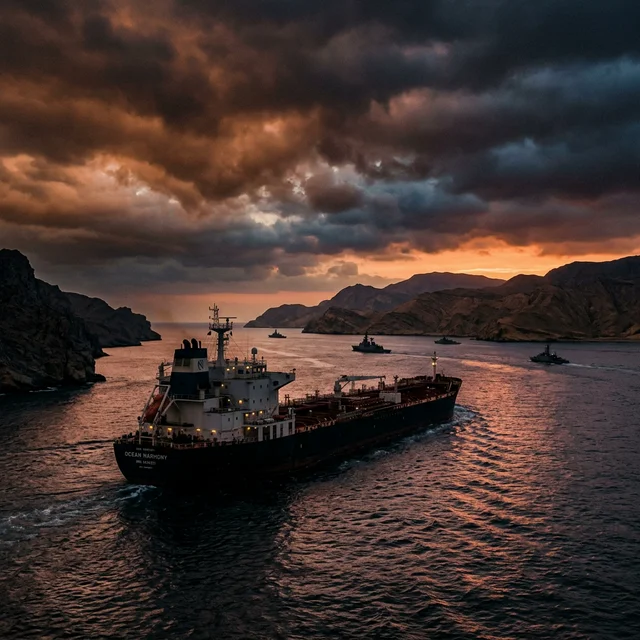
The funeral has drawn calls from multiple governments and the UN for Iran and the US-Israeli coalition to re-engage with ceasefire frameworks. The Strait of Hormuz remains partially disrupted. Oil markets have been volatile, with Brent crude trading in the $105–$125 range through June and early July.
Iran's armed forces have continued operating under existing command structures despite the leadership vacuum at the top. IRGC commanders have publicly pledged that the war effort continues regardless of the succession timeline.
What Khamenei's Funeral Signals Politically
State funerals for assassinated leaders serve a double function: they are ceremonies of grief and assertions of political continuity. Iran's government has been deliberate about the scale of the July 3 observances. The 20-million-mourner projection, the diplomatic delegations from over 100 countries, the explicit display of Iran's regional alliances — all of it is designed to communicate that the Islamic Republic is intact and that its international relationships hold.
Whether that message lands the same way inside Iran — where Khamenei had faced substantial domestic opposition before the war began — is a separate question that the funeral cannot answer.
Khamenei's Legacy
Khamenei led Iran through three decades of unprecedented change: the post-Khomeini consolidation of clerical authority, the nuclear program's development and two rounds of sanctions, the Arab Spring and its regional reverberations, and the rise of the IRGC as a regional military force through proxy networks across Iraq, Syria, Yemen, and Lebanon. His death in the middle of an active conflict means his legacy will be interpreted largely through the lens of what Iran becomes in the next five years — whether it emerges from this war as a diminished or strengthened regional power.
The Bottom Line
Khamenei's funeral is more than a ceremony of mourning. It is Iran's most consequential political event since the 1979 revolution, and its outcome — who emerges as Supreme Leader, how long the transition takes, and whether the Assembly of Experts accepts or resists a particular candidate — will shape Iran's foreign policy, nuclear posture, and internal governance for a generation. The world is watching not just the funeral cortege but the closed-door deliberations happening simultaneously in Tehran, where the real decisions are being made.
Key Facts at a Glance
Ayatollah Ali Khamenei served as Supreme Leader from 1989 to 2026 — 37 years. He was killed February 28, 2026, aged 86, in a joint US-Israeli airstrike. The state funeral began July 3, 2026, in Tehran. Expected attendance: up to 20 million mourners, making it potentially the largest state funeral in recorded history. Diplomatic delegations attending: over 100 countries. Notable absences: United States, Israel, United Kingdom, most EU member states. Successor: not yet announced as of the funeral date. The Assembly of Experts holds constitutional authority to select the next Supreme Leader.
Why did the funeral take so long? Khamenei was killed February 28 and the state funeral began July 3 — over four months later. Iranian officials have not given a complete explanation, but the delay is consistent with the extraordinary security requirements for a mass event expected to attract tens of millions of people during an active military conflict, and with the need to coordinate diplomatic attendance from over 100 countries while ceasefire negotiations are simultaneously ongoing.























































Commenting is currently unavailable on this article.