
A Real Trend, Examined Honestly
"Physical AI" — the effort to pair large-scale neural networks with robotic hardware so machines can perceive and manipulate the physical world the way they currently process language and images — is one of the most closely watched research directions in robotics and AI. It's a real trend with real investment behind it from companies across the industry. This piece looks at where the technology genuinely stands and what remains a forward-looking projection rather than settled fact.
What's Actually Working
Modern approaches increasingly train robots end-to-end, feeding raw sensor data into large models that output motor commands directly, rather than hand-coding every movement. Techniques sometimes described as "continuous learning" let robots adapt to new objects or environments with less explicit retraining than older rule-based systems required. This has produced genuine progress in narrow, well-defined tasks: warehouse picking, precision assembly, and increasingly capable robotic arms in controlled industrial settings.
Where the Hard Problems Remain
Human-level dexterity is a much higher bar than industry demos sometimes suggest. Real-world manipulation — handling deformable objects, recovering from unexpected friction or slippage, operating safely around unpredictable humans — remains substantially harder than the structured environments where most current systems perform well. Latency, power consumption, and the cost of training on physical (rather than purely digital) data are all real engineering constraints that don't disappear just because language models scaled successfully. Most serious researchers in the field describe current humanoid and dexterous-manipulation robots as impressive in demos but still narrow, brittle outside their training distribution, and expensive to deploy at scale.
The Realistic Path Forward
The more likely near-term trajectory is incremental: "cobots" that augment human workers on dangerous, repetitive, or highly precise tasks, rather than fully autonomous humanoid labor replacing people wholesale. Logistics, precision manufacturing, and specific surgical applications are the areas where physical AI is closest to broad commercial deployment today. Fully general-purpose, human-dexterity robotics operating reliably in unstructured environments — homes, unpredictable public spaces — remains, by most expert estimates, years away rather than an immediate reality.
The Takeaway
Physical AI is a genuine and important research direction, not hype, but framing it as an already-solved "convergence" overstates where the field currently is. The realistic story is steady, narrow progress with significant unsolved problems still standing between today's demos and true human-level physical dexterity.
The Specific Capability Gaps
Four capability gaps stand between current robots and genuine general-purpose physical AI:
Manipulation in unstructured environments — Today's best robots can manipulate objects reliably in structured, well-lit environments with known object positions. Moving objects on a factory line from known positions is solved. Picking up an arbitrary object from a cluttered drawer, understanding its weight and fragility without prior specification, and placing it somewhere new is not reliably solved.
Long-horizon task planning — A robot that can execute a three-step physical task reliably often fails on a thirty-step task, because errors compound and recovery from unexpected states requires generalised problem-solving that current systems lack. Cooking a meal from scratch, or packing a moving box efficiently, involves the kind of long-horizon planning that remains beyond current deployed systems.
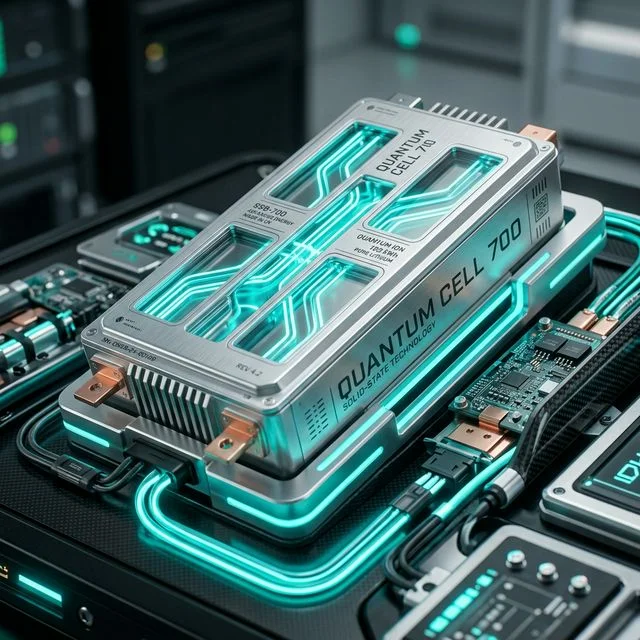
Energy density — Boston Dynamics' Atlas runs on a battery that provides roughly 60–90 minutes of active operation. Most physical tasks that humans perform over a workday require 8+ hours of mobile operation. Current battery technology does not support that operating profile at reasonable robot size and weight.
Cost — Tesla's Optimus is targeting a production cost of under $20,000; current production robots from Boston Dynamics and Agility Robotics cost $80,000–$250,000. At $20,000, the economics begin to work for high-value repetitive physical tasks. At current prices, the ROI case is limited to specific high-wage, high-volume industrial applications.
The Realistic 2026–2028 Deployment Window
The applications closest to commercial scale in the next two years are: warehouse picking (Amazon's Digit deployment), automotive assembly (BMW's ongoing robot trials), and hospital logistics (medication and specimen transport in defined hospital corridors). These are constrained, semi-structured environments where the capability gaps are manageable. True household or construction deployment remains further out.































































Commenting is currently unavailable on this article.