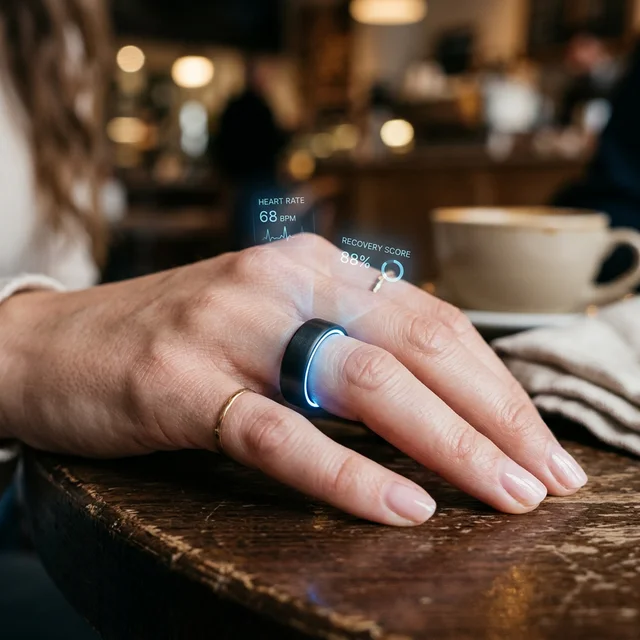
A Wearable Category That Found Its Footing
Smart rings spent years as a niche product for sleep-tracking enthusiasts. In 2026, the category has broken into the mainstream, with several major consumer electronics brands now shipping their own versions alongside the original specialist makers.
What Changed
Battery life and sensor accuracy both improved meaningfully, closing the gap with wrist-worn trackers while keeping the form factor smaller and, for many users, less obtrusive than a smartwatch. Rings have also benefited from a broader shift in wearable marketing toward "invisible" health tracking — devices that don't look like fitness gear, appealing to people who found smartwatches too conspicuous.
What They Actually Measure
Most current smart rings track sleep stages, heart rate variability, skin temperature, and basic activity, feeding that data into recovery and readiness scores rather than the live workout metrics a smartwatch provides. They are deliberately not trying to replace a smartwatch — they're positioned as a passive, always-on layer that sits alongside one.
The Real Limitations
Rings lack a screen, which means no glanceable notifications and no live workout tracking, and sizing is more finicky than a wrist strap — getting the right fit typically requires ordering a sizing kit first. Battery life, while improved, is still measured in days rather than the weeks some marketing implies under all usage conditions.
Who They're Actually For
The clearest fit is sleep and recovery tracking for people who already wear a smartwatch during the day but find it uncomfortable overnight, or who specifically don't want a screen on their wrist. As a primary fitness device replacing a smartwatch entirely, the category still has real gaps.
Why Smart Rings Are Growing
Smart rings represent a specific form factor advantage over smartwatches: nearly invisible as health tracking devices, with significantly better battery life (7–14 days vs 1–2 days for most smartwatches) because their power consumption is dramatically lower. For sleep tracking, continuous heart rate monitoring, and passive health sensing, a ring is physically superior to a watch.
The Samsung Galaxy Ring (launched July 2024) gave the category mainstream legitimacy. As of mid-2026, Samsung, Oura, and RingConn are the three largest players by sales volume.
What Current Smart Rings Actually Track
Oura Ring Gen 3 and Samsung Galaxy Ring both measure: resting heart rate, heart rate variability (HRV), blood oxygen saturation (SpO2), skin temperature, sleep stages, and activity/steps. Neither has FDA clearance for medical-grade monitoring — they are consumer wellness devices. The HRV data is particularly valued by athletes as an indicator of recovery status.
What they cannot yet do reliably: blood pressure (requires validation not yet achieved in ring form factor), blood glucose (requires near-infrared spectroscopy improvements still under development), and ECG (requires a second skin contact point that rings cannot provide).
The Market Trajectory
Smart ring market revenue was approximately $600 million globally in 2025 and is growing at roughly 25% annually. The premium tier ($250–$350 per ring plus optional subscription) is currently the primary market. Subscription fees ($6–$10/month for advanced analytics) represent ongoing revenue that hardware margin alone would not justify.
Apple has filed extensive smart ring patents but has not announced a product. If Apple enters the category — likely to be announced alongside a health monitoring narrative — it would dramatically expand mainstream awareness and accelerate adoption.






























































Commenting is currently unavailable on this article.