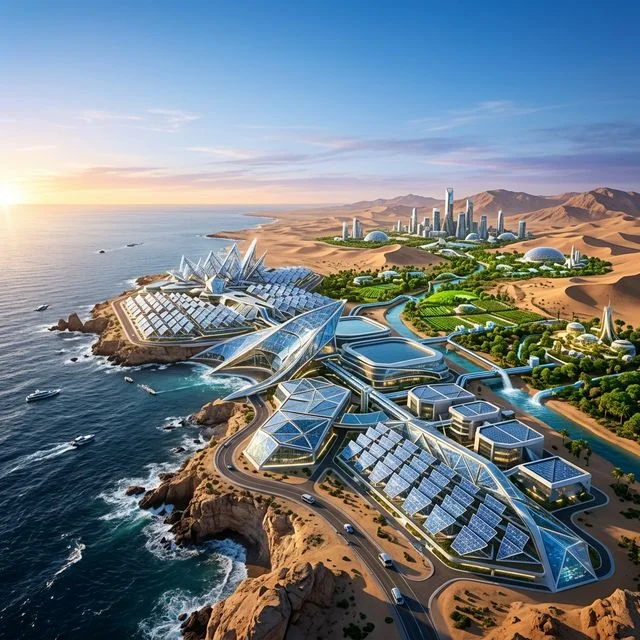
A Global Mandate for Water Density
Following a series of historic droughts that have impacted over 40% of the world's population, the United Nations has officially declared 2026 as the 'Year of Hydrological Sovereignty.' This initiative shifts the global conversation from water scarcity to 'Water Abundance' through the rapid, state-backed deployment of modular, solar-powered desalination and atmospheric water generation platforms.
The Death of Water-Debt
For many developing nations, the cost of importing water or building massive pipelines has led to crippling 'Water-Debt.' The UN's new framework provides $500 billion in low-interest green bonds specifically for nations to build their own local desalination infrastructure. 'In the agentic era, energy is a commodity, but water is life,' said the UN Secretary-General during the General Assembly in New York today.
Modular Solar Desalination: The Prize
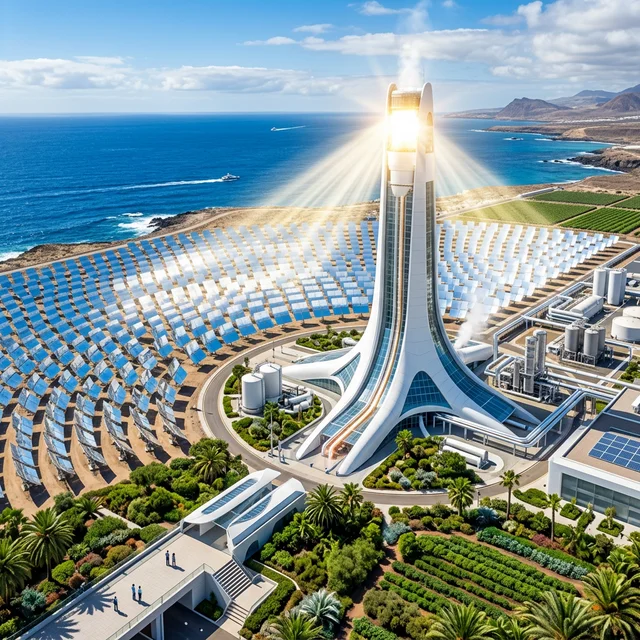
The technological hero of this initiative is the 'Modular CSD Unit' (Concentrated Solar Desalination). These units can be deployed on any coastline within 90 days, providing clean water for up to 50,000 residents without requiring a connection to a traditional power grid. Early deployments in East Africa and Southeast Asia have already shown a 20% increase in local agricultural productivity.
Geopolitics of the Blue Planet
As water becomes a manufactured resource rather than a finite natural one, the geopolitical tensions over shared river basins—such as the Nile and the Indus—are expected to ease. By providing a path to 'Hydrological Sovereignty,' the UN aims to eliminate one of the primary drivers of regional conflict in the late 2020s.










































































Join FuturEdge to share your thoughts on this article.