How It Started
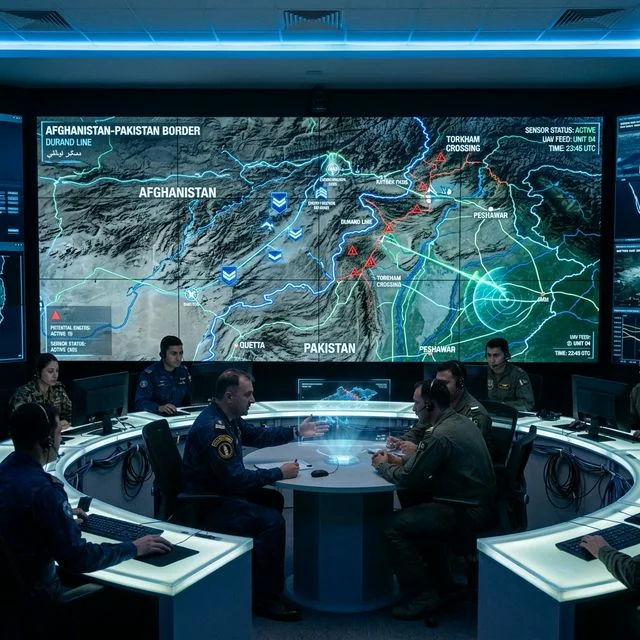
A war between Afghanistan and Pakistan began in late February 2026 following Pakistani airstrikes on militant targets in eastern Afghanistan. According to the UN Assistance Mission in Afghanistan (UNAMA), Pakistan carried out strikes between 11:45 p.m. on February 21 and 12:15 a.m. on February 22, hitting seven camps and hideouts linked to Tehrik-i-Taliban Pakistan (TTP) and ISIS-Khorasan Province near the border. Pakistani officials described the strikes as intelligence-based and selective, framed as retaliation for cross-border attacks inside Pakistan.
Munir's Role and US Posture
Field Marshal Syed Asim Munir, Pakistan's army chief, has driven the operation — referred to in some reporting as Operation Ghazab Lil Haq — with officials stating they were in no hurry to end strikes inside Afghanistan absent credible Taliban guarantees against TTP activity. Notably, US President Trump has publicly praised both Munir and Pakistani Prime Minister Shehbaz Sharif for the campaign against Taliban-linked forces, a sign of Pakistan's warming relationship with Washington even as it strains relations with China, which has historically had closer ties to the Taliban government.
Escalation and Casualties
The initial strikes broadened into sustained cross-border clashes involving airstrikes, artillery exchanges, drone incidents, and confrontations along multiple points of the Afghanistan-Pakistan border. Casualty figures circulating in some outlets and social media — including claims of 80-plus deaths from specific strikes — have not been independently verified by us and should be treated as contested pending confirmation from neutral monitors; multiple outlets, including UNAMA and independent Afghan-focused outlets, report a rising civilian toll without a single agreed figure.
Sources
- 2026 Afghanistan–Pakistan war — Wikipedia
- 2026 Pakistani airstrikes in Afghanistan — Wikipedia
- Peace Abroad, War Next Door: Pakistani Airstrikes Devastate Afghan Civilians — Drop Site News
The Context: TTP and Cross-Border Violence
Pakistan's airstrikes in Afghanistan in 2026 are the most severe escalation in Pakistan-Taliban relations since the Taliban's return to power in August 2021. The backdrop is the Tehrik-i-Taliban Pakistan (TTP) — a distinct organisation from the Afghan Taliban but with close ideological and personnel links. Since 2021, the TTP has dramatically increased cross-border attacks on Pakistani military and civilian targets, with over 1,200 Pakistani security force personnel killed in TTP attacks in 2023–2025. Pakistan has consistently alleged that TTP operates from sanctuaries inside Afghanistan with the Afghan Taliban's knowledge and tacit permission.
The Afghan Taliban government has denied harbouring TTP fighters and has not taken effective action to expel them. The underlying tension — Afghanistan's Taliban sees TTP as a legitimate resistance movement against a state that hosted US military forces; Pakistan sees TTP as an existential threat — makes diplomatic resolution structurally difficult.
What the Airstrikes Hit
Pakistan's military strikes targeted locations in Paktika, Khost, and Kunar provinces, citing TTP command nodes and weapons storage facilities. Independent reporting from Afghan journalists and NGOs documented significant civilian casualties in at least two of the strike locations, including a residential compound in Barmal district. Pakistan's military claimed the targets were confirmed TTP infrastructure; Afghan officials disputed this.
International Response
The UN Secretary-General called for restraint from both sides. China — which has significant Belt and Road investment interests in both countries — urged dialogue. The United States, no longer militarily present in Afghanistan, has limited leverage over either party. The SCO (Shanghai Cooperation Organisation), which includes both Pakistan and Afghanistan as members or observers, has been ineffective as a mediation forum.
What Comes Next? The TPA (Treaty of Perpetual Amity) between Pakistan and Afghanistan, signed in 1961, has no enforcement mechanism for cross-border military action. Diplomatic ties have been effectively suspended since Pakistan recalled its ambassador following the airstrikes. The most likely near-term outcome — based on the 2014 and 2022 precedents of previous cross-border Pakistani strikes in Afghanistan — is a period of reduced violence followed by resumed TTP attacks, without any durable resolution of the underlying sanctuary question.








































































Commenting is currently unavailable on this article.