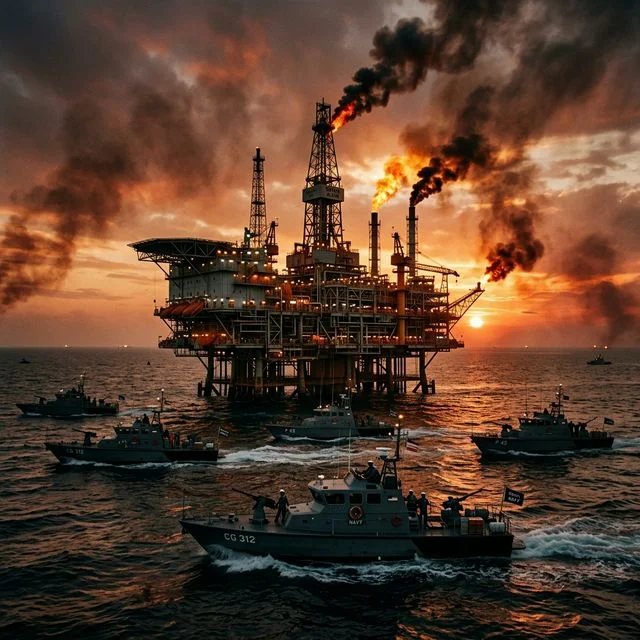
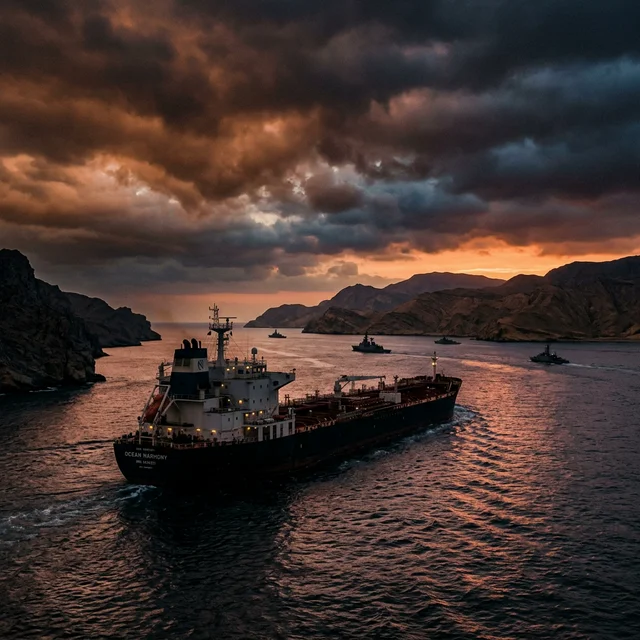
Ukraine's long-range drone campaign entered a new phase in the second week of July 2026, with Ukrainian forces conducting what Western analysts are calling an "industrial-scale" assault on Russian energy infrastructure. Over a 72-hour window ending July 10, Ukrainian drones struck 21 Russian oil tankers and hit multiple refineries across the country — including the Omsk refinery in Siberia, one of Russia's largest and deepest inside Russian territory, representing one of the longest-range Ukrainian strikes of the entire war.
The Scale of the Campaign
The Omsk strike was particularly significant. Located roughly 2,200 kilometres from Ukraine's eastern border, it demonstrated that Ukrainian forces have extended their effective drone strike range far beyond what was considered achievable even six months ago. Russia's emergency services confirmed fires at the Omsk facility but did not disclose the extent of damage.
Cumulatively, analysts estimate that Ukrainian strikes on Russian oil infrastructure since March 2026 have knocked out approximately 20% of Russia's petroleum refining capacity. The impact is measurable: Russia temporarily banned diesel exports in late June to stabilise domestic fuel supplies, a ban that was still partially in effect as of July 11.
Russia's Response and the Overnight Attack
In apparent retaliation, Russian forces launched one of the largest overnight barrages of the conflict's recent phase: 68 missiles and 351 drones were fired at Ukraine, according to the Ukrainian Air Force. Ukrainian air defences intercepted the majority, but strikes caused casualties in several regions. Ukrainian President Volodymyr Zelenskyy stated that the attack appeared timed to coincide with diplomatic attention around the NATO summit in Türkiye.
Ukraine's ground situation remained difficult in parallel. Data from the DeepState OSINT group indicated Russian forces made a net territorial gain of approximately 31 square miles of Ukrainian territory in the four-week period from June 2 to June 30, 2026, primarily in the Donetsk region.
The Drone Warfare Shift
The shift toward long-range drone strikes on energy infrastructure reflects a deliberate Ukrainian strategic calculation: even without the ability to hold or retake territory in direct ground combat, Ukraine can impose significant economic costs on Russia by degrading its energy export capacity. Russia's oil and gas revenues — already reduced by Western price caps — are further pressured when refining capacity is destroyed.
Russia's air defences, while effective against many of the strike packages, have not been able to prevent all long-range penetrations. The use of large coordinated swarms — 21 vessels in a single 72-hour window — appears designed to overwhelm point defences through simultaneous multi-vector attacks.
Diplomatic Context
US President Donald Trump said a resolution to the Ukraine war is "getting closer than people realise," citing a recent call with Russian President Vladimir Putin. The Kremlin confirmed the leaders agreed to speak again "in the near future." However, no ceasefire framework has been disclosed, and battlefield operations on both sides show no sign of deceleration ahead of any potential talks.
The NATO summit in Türkiye was expected to address Ukraine's long-term security arrangements and air defence supply. European allies have been moving to increase Patriot and IRIS-T system deliveries, with several Western governments approving new aid packages in July.
What to Watch
The sustainability of Ukraine's refinery campaign depends on continued Western supply of long-range drone components and whether Russia can accelerate its air-defence deployment to protect deep-interior facilities. If the 20% refining capacity reduction is sustained or deepened, Russia faces compounding economic pressure entering the autumn heating season — a period when domestic energy demand typically peaks and export revenue matters most to the federal budget.
Economic Pressure on Russia's War Budget
Russia's federal budget is critically dependent on hydrocarbon revenue. According to the Russian Finance Ministry's own reporting, oil and gas revenues accounted for approximately 36% of federal budget receipts in the first quarter of 2026 — a share that has grown as other sectors contracted under sanctions pressure. Sustained damage to refining capacity creates a compounding problem: Russia can still extract crude, but without refining capacity, it cannot convert that crude into the higher-value petroleum products — diesel, jet fuel, naphtha — that generate maximum export revenue.
The diesel export ban imposed in late June illustrates this dynamic. Russia's domestic diesel demand peaks in summer, driven by agricultural machinery during the harvest season. With refining capacity reduced, Moscow faces a difficult choice between supplying domestic needs and maintaining export volumes. The export ban prioritises domestic supply — which prevents political embarrassment and agricultural disruption — but at the cost of foreign exchange earnings that fund the war.
Western sanctions on Russian oil have added a secondary constraint. The G7's $60-per-barrel price cap on Russian crude, enforced through restrictions on shipping insurance and financial services for cargoes above the cap, has already reduced Russia's realised oil price relative to international benchmarks. Refinery damage further shrinks the pool of high-value exports, amplifying the price-cap effect.
European Energy Security Dimension
The strikes on Russian energy infrastructure carry implications beyond the bilateral conflict. Europe's residual dependence on Russian petroleum products — primarily diesel and naphtha flowing through third countries including Turkey and India — means that significant supply disruption in Russia can transmit into European fuel markets. Diesel prices in Northwestern Europe rose approximately 4% in the week following the June refinery strikes before stabilising as traders assessed the actual capacity impact.
European governments and the International Energy Agency have urged member states to maintain strategic petroleum reserves at elevated levels through the summer, specifically citing Russian energy infrastructure vulnerability as a risk factor. Several EU member states have also accelerated agreements with Middle Eastern and North African diesel suppliers as an explicit hedge against Russian supply disruption.
Looking Ahead
The military calculus is shifting. Ukraine's demonstrated ability to strike targets 2,200 kilometres from its border — and to do so repeatedly at scale — means that no Russian industrial facility within drone range of Ukrainian territory can be considered fully secure. Russia's options are to continue deploying layered air defences around priority targets (resource-intensive and incomplete), to accelerate mobile refinery solutions (logistically challenging), or to accept the attrition and compensate through budget adjustments.
The coming autumn heating season will be the first real test of whether Ukraine's campaign has inflicted lasting structural damage or merely temporary production disruption. If Russian refining capacity remains constrained through October, the domestic heating fuel supply crunch could become a significant political pressure point inside Russia — an outcome Ukrainian planners appear to be explicitly pursuing.







































































Commenting is currently unavailable on this article.