The Headline Numbers, Updated
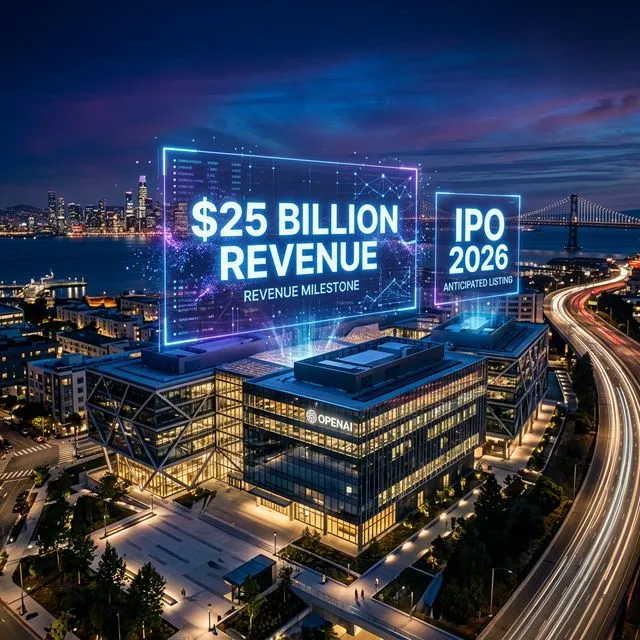
OpenAI's annualized revenue run rate has passed $25 billion, a milestone reached faster than Salesforce, Google, or Facebook hit the same mark in their own growth histories. On March 31, 2026, the company closed a $122 billion funding round at an $852 billion post-money valuation — short of the $1 trillion figure sometimes attached to its name, though within reach if growth holds. On June 8, 2026, OpenAI confidentially submitted a draft S-1 registration statement to the SEC, a real step toward going public, though the company has been careful to note that a final listing date has not been set.
Where the Revenue Comes From
OpenAI's revenue breaks down across three main product lines, based on financial information shared with investors during the March 2026 funding round:
ChatGPT subscriptions — ChatGPT Plus ($20/month) and the ChatGPT Pro tier ($200/month) together account for the largest share of direct consumer revenue. OpenAI had approximately 600 million registered users as of early 2026, with an estimated 12 million paying subscribers across its consumer tiers.
API and developer revenue — Enterprise and developer customers pay for API access to GPT-4o and GPT-5 model families. This is the higher-margin line: enterprise deals typically involve multi-year contracts with larger average contract values than consumer subscriptions.
ChatGPT Enterprise — Businesses deploying ChatGPT on private instances with additional security and compliance controls. Enterprise contracts are annual, with per-seat pricing typically in the $30–$60/user/month range for volume agreements.
The company has also been generating revenue from OpenAI o3, its reasoning model released in late 2025, which is priced at a significant premium over GPT-4o.
The Losses
OpenAI is not profitable. The company has disclosed that it expects to lose roughly $5 billion in 2026 — a figure that looks alarming in isolation but needs context. The overwhelming majority of that loss is compute: training frontier models and running inference for hundreds of millions of ChatGPT users is extraordinarily expensive in GPU costs, and those costs scale directly with usage. The question for investors is whether revenue growth is outpacing compute cost growth, and on that metric, OpenAI has shown meaningful improvement.
The Conversion to a For-Profit Entity
A structural precondition for the IPO is OpenAI's ongoing conversion from a "capped-profit" limited partnership to a standard Delaware C-corporation. The conversion transfers control from the non-profit board (which famously fired and then rehired Sam Altman in November 2023) to a conventional corporate board with fiduciary duties to shareholders. The conversion was conditionally approved by the California Attorney General in early 2026 and is expected to complete before any IPO proceeds.
Fastest Company to $25B in Revenue History
The speed of OpenAI's revenue growth is historically unusual. The company crossed $1 billion in annualized revenue in 2023, $2 billion in early 2024, $10 billion in mid-2025, and $25 billion by early 2026. For context, Salesforce took 19 years to reach $25 billion in annual revenue; Google took 15 years after its 2004 IPO. OpenAI crossed the $25 billion threshold in roughly six years from the commercial deployment of GPT-3 in 2020.
The comparison is imperfect — OpenAI benefits from decades of prior AI research investment and a post-ChatGPT cultural moment that accelerated adoption — but the raw growth rate is a legitimate data point for investors valuing the company.
Key Risks in the S-1
Based on disclosures to private investors, the principal risks OpenAI would need to disclose in its public S-1 include:
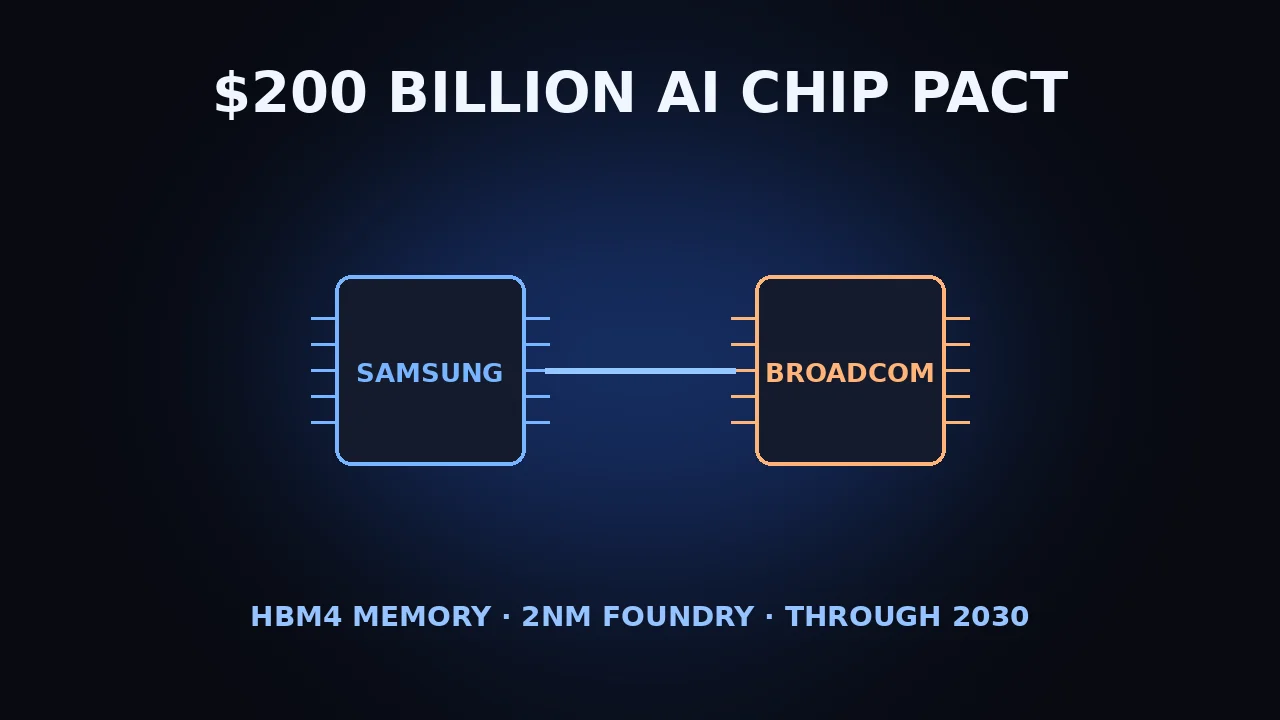
Compute dependency — OpenAI currently depends on Microsoft Azure for most of its compute. Its contract with Microsoft (which includes a $13 billion investment from 2023 and a 49% equity stake) gives Microsoft significant leverage over OpenAI's infrastructure costs and cloud relationships. The Jalapeño custom chip partnership with Broadcom is partly designed to reduce this dependency, but is years from scale.
Competition — Google (Gemini), Anthropic (Claude), Meta (Llama), xAI (Grok), and Amazon (through Bedrock partnerships) are all investing aggressively in the same market. OpenAI's lead in brand recognition is real but not guaranteed to persist.
Regulation — The EU AI Act, US executive orders, and pending congressional AI legislation all create compliance uncertainty. OpenAI has invested heavily in policy relationships, but the regulatory environment is genuinely uncertain.
What the Valuation Implies
At $852 billion, OpenAI would be valued at roughly 34 times its annualised revenue — a multiple that assumes sustained high growth, expanding margins as compute costs decline, and continued product leadership. The $1 trillion target implies even higher expectations. By comparison, Nvidia (whose GPUs underpin most of OpenAI's training) trades at roughly 25x revenue, and Google's parent Alphabet trades at about 6x. OpenAI's multiple is explicitly a bet on future growth rather than current profitability.
The Bottom Line
OpenAI is heading toward a public market debut from a position of extraordinary revenue growth but persistent losses, structural complexity, and acute competitive pressure. The $852 billion valuation prices in a future where OpenAI maintains product leadership, compute costs decline faster than they have, and regulatory headwinds don't materialise into meaningful constraints. Whether that future arrives — and whether OpenAI can get there while its Microsoft relationship evolves and Anthropic and Google close the product gap — is the central question that public market investors will need to answer.
Key Numbers at a Glance
OpenAI's current financial profile: $25 billion annualised revenue run rate; approximately $5 billion projected 2026 operating loss; $852 billion valuation at March 2026 funding round; roughly 600 million registered ChatGPT users; approximately 12 million paying subscribers; S-1 confidentially filed June 8, 2026. The company has raised over $40 billion in total venture and strategic funding since its founding, with Microsoft ($13 billion) and SoftBank ($15 billion from the 2025 Stargate investment) as its largest outside shareholders.






















































Commenting is currently unavailable on this article.