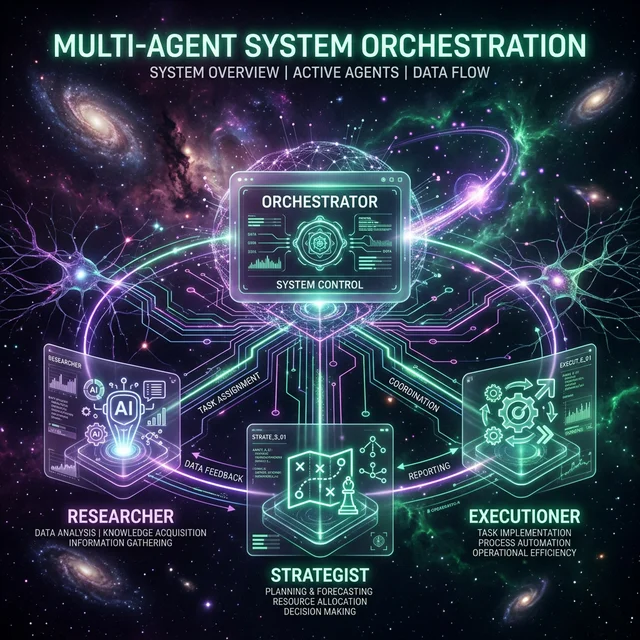
The Death of the Interface, the Birth of the Agent
In a landmark keynote delivered today, March 17, 2026, Nvidia CEO Jensen Huang declared that the era of traditional Software-as-a-Service (SaaS) is coming to an end. In its place, we are seeing the rise of Agentic-as-a-Service (AgaaS). Huang estimates that this transition will unlock over $1 trillion in new economic value by 2027 as AI agents move from being assistants to autonomous economic actors.
$1 Trillion in Autonomous Revenue
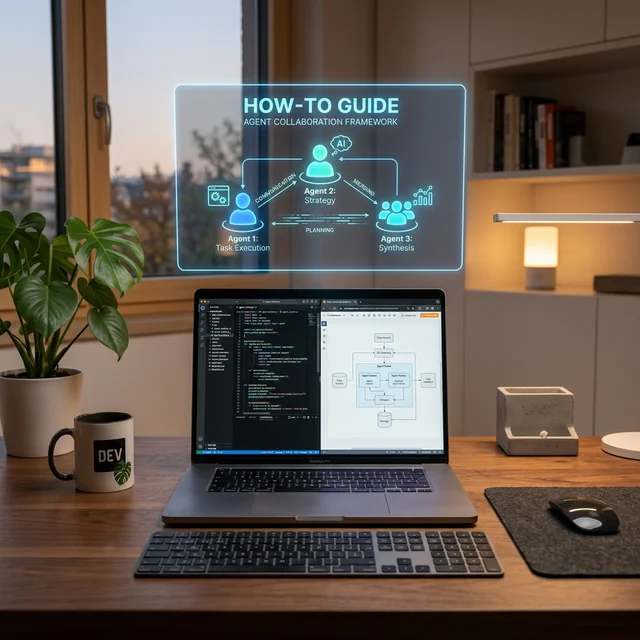
The fundamental shift lies in how value is delivered. Traditional software requires a human to drive the interface. AgaaS, powered by Nvidia's 'Orchestrator' chips, enables software to set its own goals, use tools, and collaborate with other agents. "We are building the factories of the future," Huang stated, "and these factories don't produce cars; they produce intelligence and autonomous task execution."
Market Implications
For businesses, this means a total rethink of the tech stack. Companies are no longer buying individual seats for software; they are hiring 'agentic clusters' that can handle entire departmental functions—from legal discovery to automated supply chain management. As the Agentic AI market is projected to reach $139 billion by 2034, Nvidia's hardware remains the bedrock upon which this autonomous world is being built.
What AgaaS Actually Means
AgaaS (AI-as-a-Service or Agent-as-a-Service) describes the structural shift in enterprise software: from tools humans use to accomplish tasks, to agents that autonomously accomplish tasks using AI. Every major SaaS product is adding an AI layer that can execute the product's core functions without constant human input.
Examples already shipping: Salesforce Agentforce (CRM actions by AI agents), HubSpot Breeze AI (autonomous marketing workflows), ServiceNow AI Agents (IT support resolved without human review), Zendesk AI (end-to-end customer support).
Nvidia's Vision
Nvidia's infrastructure-level argument is that AI agents need dedicated compute — specifically, inference-optimised GPU clusters — to operate at enterprise scale. The $1 trillion figure associated with Nvidia's AgaaS vision references analyst estimates of the total enterprise software market being disrupted or augmented by AI agents over the next five years. It is a total addressable market claim rather than Nvidia's own projected revenue.
The Pricing Model Shift
The transition from SaaS to AgaaS is gradual and additive. Most enterprise products are adding AI agent capabilities to existing interfaces rather than replacing human-operated interfaces entirely. The pricing shift is more significant: many AgaaS products are moving from seat-based pricing (flat fee per user) to consumption-based pricing (charged per task or workflow completed), aligning vendor revenue with actual value delivered.
The Accountability Gap
When an AI agent takes an action that causes harm — sends an incorrect customer communication, makes a wrong procurement decision, misroutes a support ticket with consequential results — the accountability trail is murkier than in human-operated workflows. Enterprises adopting AgaaS are discovering that their governance frameworks were designed for human decision-making and need significant updating before AI agents can be safely deployed in high-stakes workflows.
What to Watch
The most significant indicators of how quickly the SaaS-to-AgaaS transition will proceed: enterprise AI agent error rates in production (current rates remain too high for unsupervised deployment in most high-stakes workflows), regulatory responses to automated decision-making (EU AI Act requirements for human oversight in certain categories will shape deployment constraints), and whether consumption-based pricing expands or contracts relative to seat-based pricing (a pricing model shift is a fundamental change in SaaS business economics that will take several years to play out across the industry).






































Commenting is currently unavailable on this article.