
Setting the Record Straight on Price
As of late June 2026, Bitcoin is trading in the $58,000–$62,000 range, well off its prior cycle highs and far from the $250,000 figure that some analysts have floated as a long-term target. This piece looks at that $250,000 scenario as exactly that — a scenario — rather than something that has already happened, and walks through what proponents and skeptics actually argue.
The Bull Case: Sovereign Reserve Adoption
The most-cited bullish argument for Bitcoin reaching six figures and beyond centers on sovereign and institutional balance sheets. A handful of countries and large asset managers have already added Bitcoin to reserve holdings in smaller allocations, and spot Bitcoin ETFs have pulled a meaningful share of circulating supply into long-term custody since their approval. Proponents argue that if even a modest percentage of global central bank reserves were reallocated to Bitcoin over the next several years, the resulting demand against a fixed 21-million-coin supply could drive a price far above current levels. This is the logic behind comparisons to gold's role as a reserve asset, sometimes called the "digital gold" thesis.
The Bear Case: Volatility and Macro Headwinds
The case against near-term six-figure-plus prices is straightforward: it hasn't happened, and 2026 has been a difficult year for crypto broadly. ETF outflows, delays to pending US crypto market-structure legislation, and a rotation of investor capital toward AI infrastructure stocks have all weighed on prices through the first half of the year. Critics also point out that "reserve asset" adoption by sovereign states remains rare and politically contested, and that Bitcoin's price has historically moved on liquidity cycles and speculative flows more than on any steady reserve-accumulation trend.
What Would Actually Have to Happen
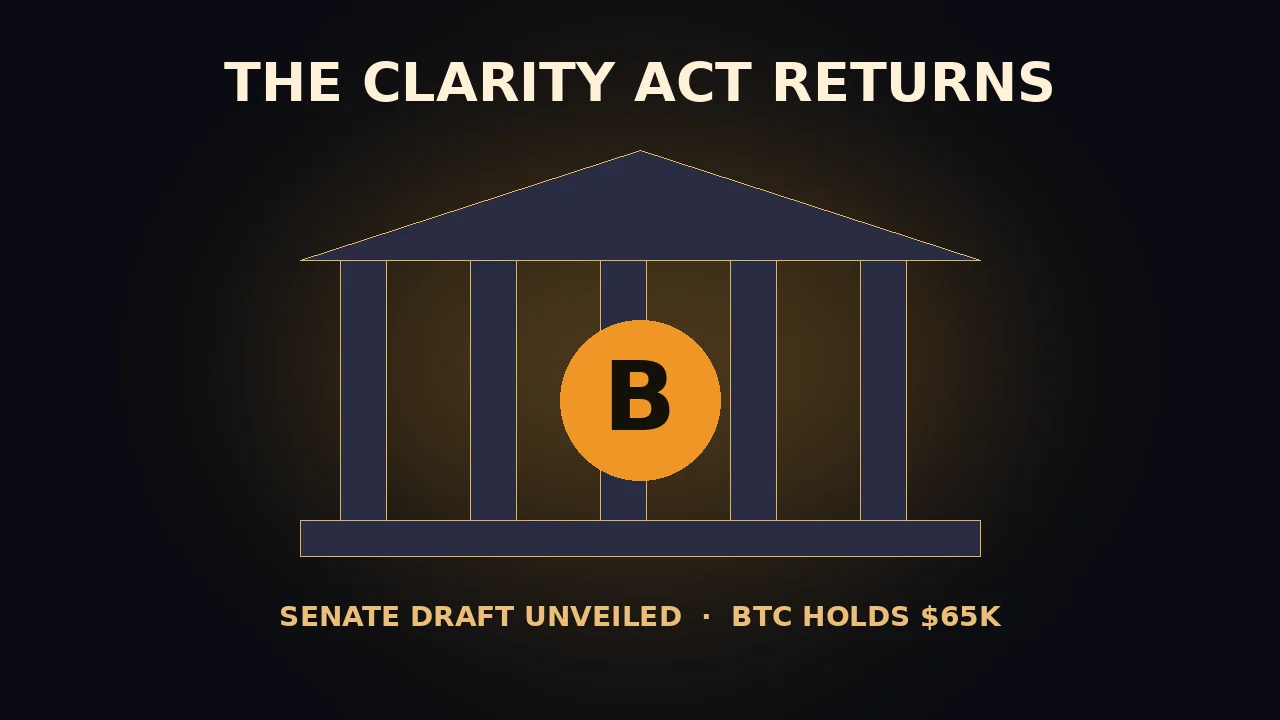
For the $250,000 scenario to play out, several things would likely need to align: a reversal of the current ETF outflow trend, passage of clearer US regulatory frameworks (such as the long-delayed CLARITY Act), and at least a few additional sovereign or large institutional reserve allocations large enough to meaningfully tighten available supply. None of that is implausible over a multi-year horizon, but none of it is close to confirmed today.
The Honest Takeaway
Treat $250,000 Bitcoin as a forecast, not a fact — one end of a wide range of analyst projections for this decade, built on a real but still-unproven thesis about sovereign reserve demand. The more interesting story in 2026 isn't a price level; it's whether institutional infrastructure (ETFs, custody, regulatory clarity) matures enough to make that thesis testable in the first place.
What Would Actually Need to Happen
For Bitcoin to reach $250,000, the bull case requires a specific sequence of events rather than a simple extrapolation of past price appreciation. The most credible pathway involves: (1) continued Federal Reserve rate cuts creating a favorable macro environment for risk and scarce assets; (2) at least one or two additional sovereign states announcing Bitcoin as a reserve asset, following the precedent set by El Salvador and, more conditionally, by US executive order directing treasury to hold Bitcoin; (3) institutional ETF assets under management growing from the current ~$70 billion to $200 billion or above, representing a large enough price-inelastic buyer base to absorb selling pressure at higher prices.
The Bear Case at Current Prices
At $63,000–$65,000, Bitcoin is already pricing in significant institutional legitimacy. The bear case for $250,000 by end of 2026 is simply that the required catalysts don't arrive on the expected schedule. If the Fed pauses rate cuts due to sticky inflation, if Congressional CLARITY Act stalls (removing the regulatory clarity that institutional investors need), or if a high-profile ETF redemption event creates forced selling, then the path to $250,000 extends to 2027 or later.
What Analysts Are Actually Forecasting
Current 2026 year-end Bitcoin price forecasts from major financial institutions range from approximately $80,000 (more cautious sell-side desks) to $180,000 (the most bullish institutional forecasts). The $250,000 figure is an outlier that represents the top of the distribution of optimistic scenarios, not a base case. Standard Chartered's 2026 Bitcoin forecast (published January 2026) has it at $200,000 by end of year; Goldman Sachs's revised forecast from March 2026 targets $130,000–$150,000.








































































Commenting is currently unavailable on this article.