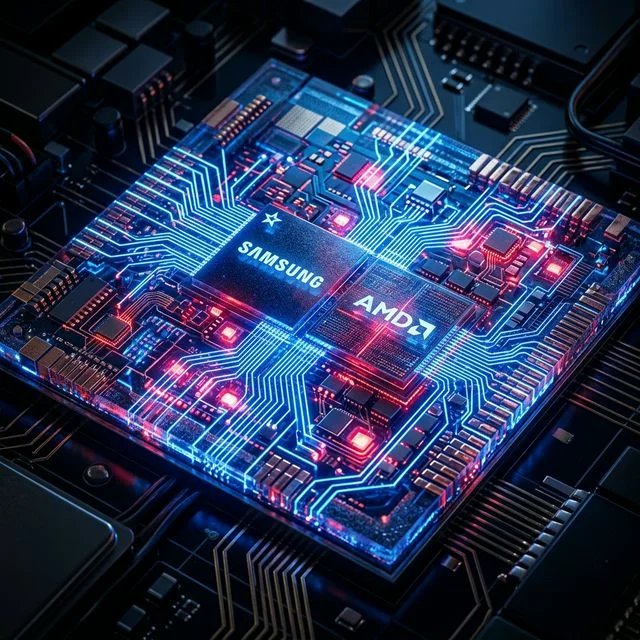
Building the AI Engine of 2027
In a landmark joint announcement today, Samsung Electronics and AMD have solidified a strategic partnership that will define the next five years of AI hardware. Samsung has been named the primary supplier for HBM4 (High Bandwidth Memory) for AMD's future AI accelerators, ensuring that the next wave of 'Agentic' computing has the bandwidth it needs to process trillion-parameter models at the edge.
Technical Synergies
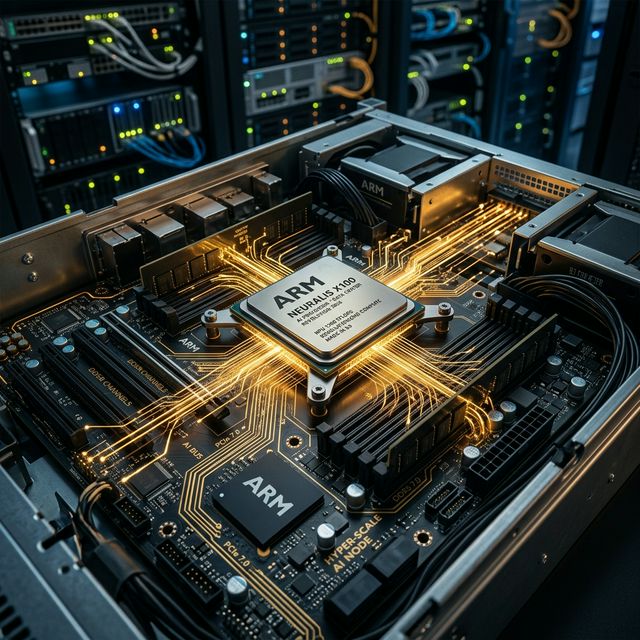
The alliance goes beyond simple supply. Engineers from both firms are co-developing advanced DRAM solutions specifically for AMD's EPYC server CPUs, aiming to reduce power consumption by 25% while increasing data throughput by 40%. This is a direct response to the soaring energy costs being faced by global data center operators. "We aren't just building chips; we are building the neural pathways for the world's second workforce," stated a senior AMD architect.
Market Impact
This partnership significantly strengthens AMD's position in the high-end AI market, providing a robust counter to Nvidia's current dominance. For Samsung, it secures a massive lead in the competitive HBM market. For FuturEdge readers, this is the clearest sign yet that the AI boom is moving into a phase of deep industrial integration, where the hardware itself is being specialized for autonomous task execution.
What the Partnership Involves
Samsung and AMD's 2026 AI alliance announcement extended their manufacturing relationship into co-development of AI-specific silicon across three areas:
HBM memory co-design — Samsung's HBM4 memory co-designed with AMD's MI400 AI accelerators to optimise the interface between memory stack and logic die, reducing latency and improving effective bandwidth.
NPU integration — AMD's XDNA neural processing unit architecture integrated with Samsung's Exynos mobile processor roadmap for higher-performance on-device AI inference in Galaxy phones using Exynos chips.
Joint AI software stack — AMD's ROCm open-source framework extended with Samsung-specific optimisations for inference workloads.
Why AMD Needs This
AMD's AI accelerator position has been weaker than Nvidia's primarily due to software ecosystem maturity (CUDA dominance) rather than hardware capability. The MI300X has competitive specifications to Nvidia's H100 but fewer deployments because training frameworks are more optimised for CUDA. The Samsung partnership builds more co-optimised reference deployments — the missing piece in AMD's AI competitive story.
What Samsung Gets
Samsung benefits from being the preferred memory partner for AMD's AI accelerator roadmap, securing HBM supply agreements at scale, and gaining NPU technology from AMD's XDNA expertise to improve its mobile AI capabilities in competition with Qualcomm's Snapdragon Hexagon NPU and Apple's Neural Engine.
What This Means for Nvidia's Competitive Position
Samsung-AMD is not an immediate threat to Nvidia's AI accelerator dominance. Nvidia's CUDA software ecosystem, developed over 15 years, represents a switching cost that hardware specifications alone cannot overcome. The Samsung-AMD partnership's most meaningful impact is accelerating the alternative ecosystem's maturity — ROCm's growing compatibility with PyTorch and TensorFlow training frameworks, more optimised reference hardware for AMD AI inference, and HBM supply security for AMD's AI roadmap. The competitive dynamic is a two-to-three-year timeline to meaningful market share competition in AI inference, where CUDA lock-in is weaker than in training.






















































Commenting is currently unavailable on this article.