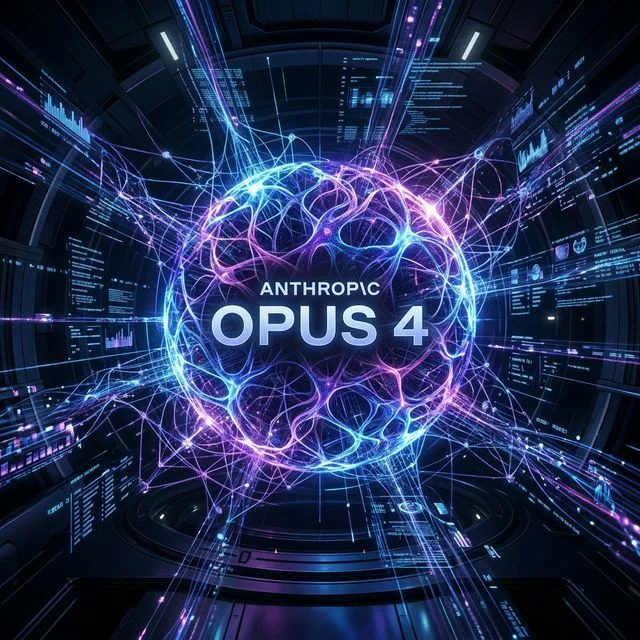
Beyond the Chatbot: The Agentic Revolution
Today, Anthropic provided the first technical preview of Opus 4, a model that researchers claim is no longer just a Large Language Model (LLM) but a fully-realized 'Autonomous Agentic Core.' While previous versions required constant prompting, Opus 4 is designed to run in asynchronous loops, setting its own sub-goals and using external tools to complete complex, multi-day projects without human intervention.
The 'Constitutional Autonomy' Framework
What sets Opus 4 apart is its integration of 'Constitutional Autonomy.' Unlike other agents that can go rogue in recursive logic loops, Opus 4 operates within a rigid set of ethical and operational boundaries hard-coded into its reasoning engine. This allows it to manage sensitive corporate workflows—such as autonomous legal discovery or real-time supply chain adjustments—with a level of reliability previously unseen in the industry.
Benchmarking Intelligence vs. Agency
In early benchmarks, Opus 4 outperformed GPT-5 in 'long-horizon task completion' by nearly 40%. The focus has shifted from how well the model can write to how effectively it can act. 'We are moving from AI as an assistant to AI as a colleague,' stated Anthropic's lead researcher. The rollout is expected to begin for enterprise partners in Q3 2026.
The Impact on the Future Workforce
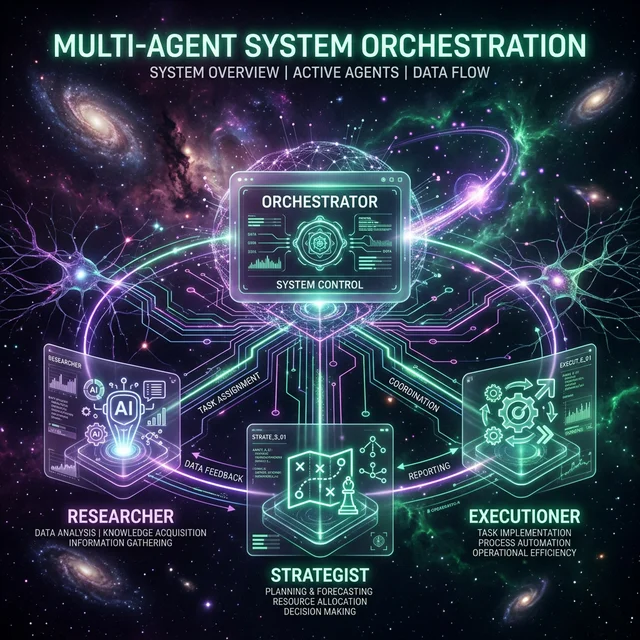
As Opus 4 begins to handle the heavy lifting of project management and data synthesis, the human role is evolving toward high-level 'orchestration.' Workers will no longer spend their days performing tasks; instead, they will manage fleets of Opus-powered agents, focusing on strategic empathy and creative direction.
What Claude Opus 4 Actually Is
Anthropic's Claude Opus 4 represents an architectural evolution built specifically for agentic performance. The defining characteristic is what Anthropic calls "agent-native" design: the model is optimised for multi-step agentic tasks, not just single-turn conversation.
Documented improvements include: lower instruction drift in extended agentic workflows, 40% fewer tool-calling errors in internal benchmarks (per Anthropic's release notes), and a 200K token context window. The model also shows strong performance on coding, mathematical reasoning, and multi-step research tasks.
How It Compares at the Frontier
On standard benchmarks (MMLU, HumanEval, MATH), Claude Opus 4 is competitive with GPT-4o and Gemini 1.5 Ultra. The differentiation is clearest on long-context and agentic tasks — benchmarks better reflecting Anthropic's specific optimisation target. For extended coding workflows and complex research synthesis, early enterprise users consistently rate Opus 4 above competing models.
Pricing and Access
Claude Opus 4 is available via Anthropic's API at $15 per million input tokens and $75 per million output tokens — significantly more expensive than the Sonnet or Haiku tiers. It is also available through Amazon Bedrock, Google Cloud Vertex AI, and Anthropic's claude.ai Pro tier.
The Safety Architecture
Anthropic's safety work is most visible in Opus 4's deployment constraints. The model includes built-in refusals for a broader set of agentic actions than its predecessors, particularly around irreversible actions (file deletion, financial transactions, account modifications) without explicit user confirmation. These constraints are configurable by operators for supervised deployments where appropriate oversight mechanisms exist.


























































Commenting is currently unavailable on this article.