How a Contract Clause Became a Constitutional Standoff
Anthropic's relationship with the US government started promisingly. In July 2025, it became the first AI laboratory to sign a contract to integrate frontier AI models into Pentagon mission workflows on classified networks, a two-year arrangement worth roughly $200 million. By February 2026, that relationship had collapsed over a single clause.
The Disputed Language
Renegotiations broke down when the Pentagon insisted on contract language that would permit operators to use Claude outputs as direct inputs for autonomous lethal targeting decisions — without mandatory human review in the decision loop. Anthropic's published Responsible Scaling Policy prohibits exactly this: the company defines "autonomous weapons" broadly enough to include AI-assisted targeting without human authorization, and treats that constraint as non-negotiable regardless of customer. The company offered to continue supplying models for logistics, intelligence analysis, and administrative workflows, but held the line on the targeting language.
The Designation and What It Means Legally
The Trump administration's response escalated beyond contract termination. By designating Anthropic a "national security supply-chain risk" — the first such designation ever applied to an American AI company — the administration created a legal instrument that can be used to discourage or block other federal agencies from procuring Anthropic products even outside the Pentagon context. It also creates complications for Anthropic's international government sales, since allied governments sometimes review US supply-chain designations when making their own procurement decisions.
The designation does not affect Anthropic's ability to operate commercially in the US private sector, and the company has said it will contest it in court. Legal analysts note that applying a national security designation to a US company over an ethical policy disagreement rather than a genuine security vulnerability is unusual and may face judicial scrutiny.
OpenAI's Contrasting Approach
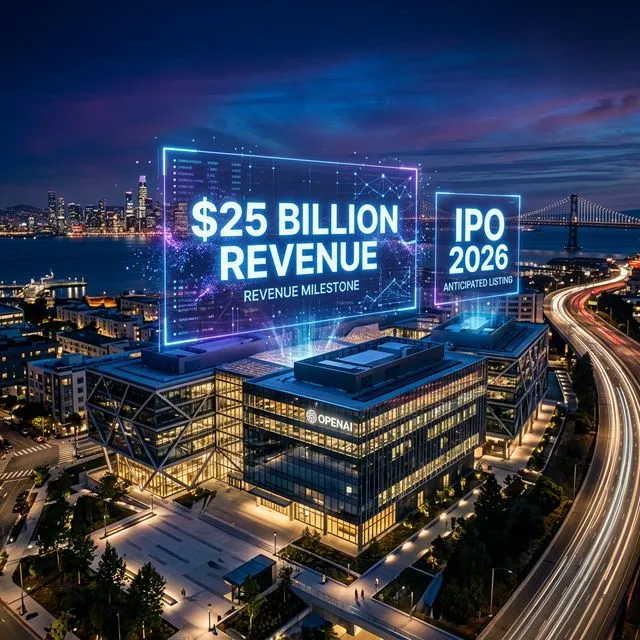
Hours after the Anthropic-Pentagon split became public, OpenAI announced a Pentagon contract covering many of the same workflows. OpenAI has not published a policy equivalent to Anthropic's Responsible Scaling Policy, and its terms of service do not prohibit lethal autonomous weapons applications in the same categorical terms. The contrast is deliberate and visible: the Pentagon's procurement team effectively replaced one provider with another willing to accept the contested language.
That said, OpenAI's deal has its own constraints. Specific targeting decisions still require human authorization under existing DoD policy, and the company has said publicly it does not support fully autonomous lethal decision-making. The practical difference between Anthropic's red line and OpenAI's is narrower than the headlines suggest — but the contractual willingness to accept the language was enough to matter.
What This Means for AI Safety Companies
The dispute represents the clearest collision yet between AI companies' internal safety constraints and government procurement requirements. For any AI laboratory with a published responsible use policy that includes categorical prohibitions, the question is now explicit: are those constraints enforceable against government customers with national security mandates?
The answer, in Anthropic's case, appears to be yes — at significant cost. The company lost a flagship government contract, accepted a legally damaging designation, and watched a competitor step in immediately. Whether that trade-off reflects courage, commercial misjudgement, or both depends on how you weight near-term revenue against long-term trust with safety-conscious enterprise customers.
Implications for International AI Procurement
The US government's use of a supply-chain designation to penalise an AI company for its ethical constraints is being watched closely by allied governments building their own AI procurement frameworks. The UK, EU, and Australia have all launched government AI contracts and are developing their own usage policies. A precedent where the US designates a company for adhering to published safety constraints rather than for genuine security concerns complicates the argument that safety-focused AI development is commercially viable at government scale.
What Comes Next
Anthropic has indicated it will pursue legal remedies. The case also appears likely to reach Congress: several senators on both sides of the aisle have expressed concern about using national security instruments to override an AI company's published ethics policy. Whether that translates into legislation or just hearings remains to be seen.
The Bottom Line
For AI companies that have staked their commercial identity on safety commitments, the Anthropic-Pentagon dispute is an early but significant test. It demonstrates that the US government is now a sophisticated enough AI buyer to identify exactly which safety constraints matter to it and to extract contract language that removes them — or find another vendor. The outcome also suggests that "safety company" is not a shield against commercial or political consequence: it is a positioning choice with real costs when government priorities conflict with it.
The dispute is unlikely to resolve itself quietly. Anthropic's planned legal challenge and the designation's novelty — applying a supply-chain instrument to an ethical policy disagreement — set up a confrontation that will probably define how AI ethics commitments interact with national security procurement for years to come.
Key Dates
July 2025 — Anthropic signs initial Pentagon AI contract worth approximately $200 million over two years. January–February 2026 — Renegotiations begin over contract renewal language; discussions break down over autonomous targeting clause. February 2026 — Pentagon terminates Anthropic contract; OpenAI signs replacement deal. March 2026 — Trump administration issues "national security supply-chain risk" designation against Anthropic — the first such designation applied to an American AI company. April 2026 — Anthropic announces intent to pursue legal challenge to the designation.







































Commenting is currently unavailable on this article.