
What Got Announced
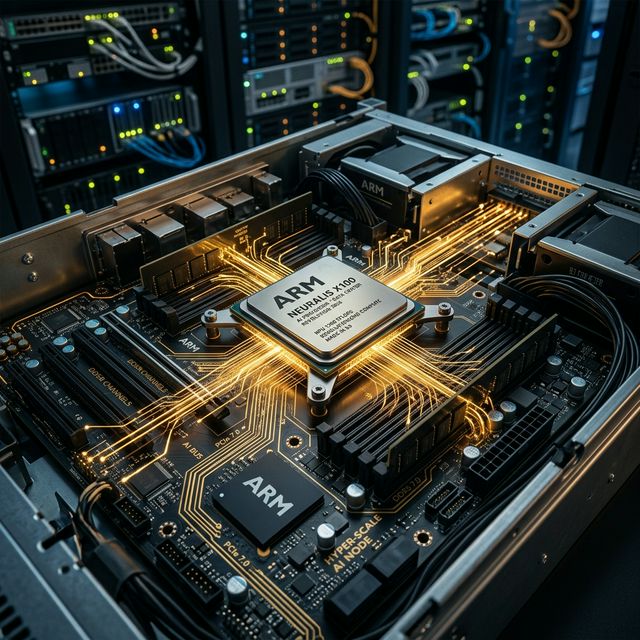
OpenAI and Broadcom have unveiled Jalapeño, OpenAI's first custom-designed AI processor, eight months after the two companies first announced their chip partnership. Unlike a general-purpose GPU, Jalapeño is an application-specific integrated circuit, or ASIC, built specifically for inference: the work of running an already-trained model to answer a user's prompt, as opposed to training the model in the first place.
Why Inference, Specifically
Inference, not training, is where the bulk of an AI company's ongoing compute costs actually live once a model ships, because inference scales directly with usage. Every ChatGPT query requires GPU time. With ChatGPT processing more than 1 billion queries per day, the cost of running inference at scale is OpenAI's single largest ongoing expense — and Nvidia's H100 and H200 GPUs were not designed with that specific workload in mind.
An inference-optimised ASIC can run the same calculations more cheaply and with lower power consumption because it doesn't carry the flexibility overhead of a general-purpose GPU. Google demonstrated this with its Tensor Processing Units (TPUs), which now handle most of Google's internal AI inference at a significant cost advantage over off-the-shelf Nvidia hardware.
The Broadcom Partnership and TSMC
Broadcom is one of the two companies (alongside Marvell) capable of designing and bringing to production the custom AI ASICs that hyperscalers want at the required scale. Broadcom designed Google's current-generation TPU (v5p), Meta's MTIA inference chip, and ByteDance's own custom AI accelerator. OpenAI brings the model expertise and the specification; Broadcom brings the silicon design capability and the relationship with TSMC for manufacturing.
TSMC's N3P (3nm) process node will manufacture Jalapeño, placing it on the same fabrication process as Nvidia's upcoming Blackwell Ultra chips. TSMC's leading-edge manufacturing capacity is heavily oversubscribed through 2027, which means Broadcom's existing wafer agreements with TSMC were a significant part of why OpenAI chose Broadcom as its partner rather than attempting to work directly with the foundry.
The Competitive Landscape for Custom AI Silicon
Jalapeño joins a growing field of hyperscaler custom AI chips:
Google TPU v5p — Google's most advanced custom chip, deployed across its Cloud and internal AI infrastructure. Google is estimated to have invested over $30 billion in TPU development since 2015.
Amazon Trainium 2 / Inferentia 3 — Amazon's custom chips for training and inference respectively, available through AWS. Trainium 2 launched in late 2024 for Amazon's own Bedrock inference service.
Meta MTIA — Meta's inference chip, deployed across its recommendation systems and Llama model inference internally. Meta is reportedly developing a second-generation chip with much higher throughput.
Microsoft Maia 100 — Microsoft's custom AI accelerator, designed for Azure. Announced in 2023 and deployed in limited Azure infrastructure since 2024.
OpenAI is notably later to this field than most of its infrastructure-scale peers. The nine-month development timeline for Jalapeño — cited in OpenAI's and Broadcom's joint announcement — is faster than is typical for an ASIC (which normally takes 18–24 months from specification to tape-out), suggesting some design acceleration through the partnership.
What It Changes for Nvidia
The honest answer: not much yet. Nvidia's H100 and H200 GPU clusters will continue to handle all of OpenAI's model training — no custom ASIC currently matches Nvidia's all-around flexibility and memory bandwidth for the irregular workloads that training frontier models involves. Jalapeño is specifically positioned for inference, and even there, it will take 12–18 months to deploy at scale within OpenAI's infrastructure.
Nvidia's market share in AI training GPUs is roughly 80% and has been remarkably resistant to competition from both AMD (with its MI300X) and custom silicon. The risk to Nvidia from inference ASICs is real but gradual: as each major hyperscaler builds out its own inference capacity, it reduces its Nvidia GPU demand margin, not its training demand.
The more significant risk to Nvidia is that inference ASICs commoditise the use case where GPU volume is highest, compressing the growth that currently justifies Nvidia's premium valuation.
OpenAI's Strategic Goal
The chip initiative fits into a broader pattern of OpenAI reducing its dependency on single-supplier relationships. The company's Microsoft Azure agreement gives Microsoft significant leverage over OpenAI's compute costs and cloud revenue share. The Broadcom partnership diversifies OpenAI's infrastructure options and gives it a path to vertical integration similar to what Google and Amazon have achieved.
Sam Altman has publicly said he believes the ability to control its own silicon is a prerequisite for OpenAI to compete as an independent entity in the long run — a view that has driven both the Broadcom partnership and earlier-reported attempts to raise capital for a much larger semiconductor venture.
The Bottom Line
Jalapeño marks OpenAI's first real step toward the vertical integration that its hyperscaler rivals achieved years ago. The nine-month development timeline, if accurate, is impressive — but the chip won't materially reduce OpenAI's Nvidia dependency for at least 12–18 months of deployment ramp. The more significant announcement is strategic: OpenAI is signalling that it intends to compete as a full-stack AI infrastructure company, not just a model provider, and that its long-term ambitions extend well beyond its current Microsoft relationship. How Nvidia responds — whether through pricing concessions, deeper partnership, or more aggressive competition — will be worth watching as Jalapeño moves toward production scale.
Key Specs and Timeline
Jalapeño is built on TSMC's N3P 3nm process. It is designed specifically for transformer inference workloads. Initial production wafers are expected in Q4 2026, with meaningful deployment inside OpenAI's data centres beginning mid-2027. OpenAI has not published peak TOPS (tera-operations per second) figures or memory bandwidth specifications — standard practice for proprietary ASICs ahead of production. The chip's internal codename, Jalapeño, follows OpenAI's pattern of food-themed project names (Strawberry was the internal name for OpenAI o1).






























































Commenting is currently unavailable on this article.