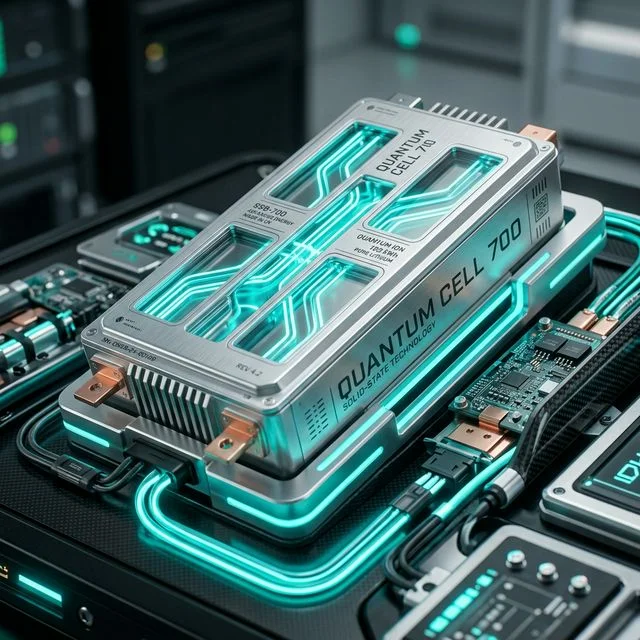
A Technology That's Been Almost-Ready for a Decade
Solid-state batteries have been described as imminent for so long that the claim itself became a running joke in the energy storage industry. In 2026, that's started to change in a limited but genuine way, with the first small-scale commercial products — rather than prototypes and pilot lines — reaching the market.
What's Actually Different
Solid-state designs replace a battery's liquid electrolyte with a solid material, which allows for higher energy density, reduced fire risk, and potentially much faster charging. The manufacturing challenge has always been producing that solid electrolyte layer reliably at scale, without defects that cause the cell to fail.
Where It's Showing Up First
Consistent with how most battery innovations enter the market, solid-state cells are appearing first in smaller-format products — premium consumer electronics and some specialty equipment — where production volumes are lower and price sensitivity is reduced, rather than immediately in electric vehicles where the cost and scale requirements are far higher.
The EV Timeline Reality Check
Several automakers have solid-state EV battery programs in development, but the realistic path to vehicles at scale still points toward the back half of this decade for mainstream models, even as specific manufacturers continue to announce earlier internal targets. Battery technology has a long history of automaker announcements outrunning actual production timelines, and there's little evidence that pattern has fully broken.
What's Genuinely Worth Tracking
The manufacturing yield numbers — how many cells come off a production line defect-free — are the real signal to watch, far more than announcement dates. That's the metric that determines whether solid-state batteries scale from boutique products into the mainstream, and it's improving steadily rather than suddenly.
What's Actually Different in 2026
Solid-state batteries have been "five years away" for nearly two decades. What makes 2026 different is that two distinct technical approaches have now produced cells with commercially relevant cycle life, not just laboratory energy density records.
Sulfide-based electrolytes (pursued by Toyota, Samsung SDI, and Solid Power) offer the highest conductivity among solid electrolytes but are chemically reactive with air and moisture, requiring expensive dry-room manufacturing. Toyota has announced a target of 1,200 km range on a single charge using sulfide solid-state batteries in a 2027 production EV.
Oxide-based electrolytes (pursued by QuantumScape and Solid Power) are more stable but have lower conductivity at room temperature. QuantumScape's most recent quarterly report showed cells achieving 400+ charge cycles while retaining 80% capacity — the industry threshold for automotive warranty purposes.
Why Manufacturing Is the Hard Part
The energy density of solid-state cells has been demonstrated in the lab. The challenge is producing them at automotive scale at costs competitive with lithium-ion. Current solid-state cell production costs are estimated at $400–$800 per kilowatt-hour, compared with $80–$120/kWh for leading lithium-ion producers. Closing that gap requires manufacturing yield improvements, new dry-room technologies, and material cost reductions that take years to develop.
The realistic commercial timeline: premium EVs with solid-state packs in 2027–2028; volume production at cost-competitive pricing in 2030–2032.
Key Players and Their Status
Toyota remains the most aggressive in public timelines. QuantumScape (NASDAQ: QS) has disclosed encouraging pilot-line results. Solid Power (NASDAQ: SLDP) is in joint development with BMW and Ford. Samsung SDI is expected to supply solid-state cells to BMW for the Neue Klasse EV platform launching in 2026–2027. Each company is at a different stage of the same fundamental challenge: scaling laboratory chemistry into manufacturing reality.




















































Commenting is currently unavailable on this article.