The Bid That Reversed
For two years the simplest bullish argument for Bitcoin was structural: corporate treasuries were buying more than miners could produce. That mechanism has stopped working the way it did.
On July 6, Strategy — the largest corporate holder and the market's most dependable structural buyer since 2022 — sold 3,588 BTC, roughly $216 million worth. Other companies have trimmed holdings to repay debt and shore up balance sheets. The lesson is not that corporate adoption failed; it is that leveraged treasury accumulation is a two-way trade. When financing costs bite, the buyer of last resort becomes a seller.
That single fact reframes every institutional-demand thesis currently circulating.
Where the Analysts Actually Disagree
Published targets have rarely been this dispersed, and the spread is informative.
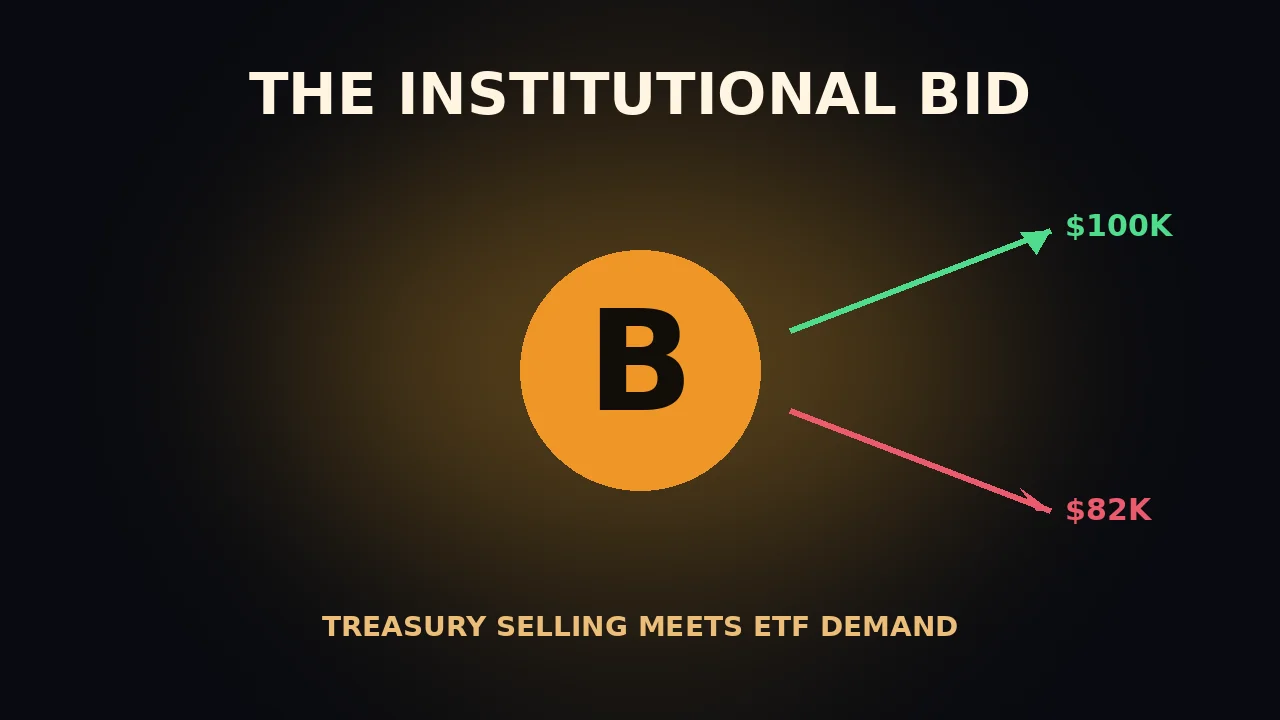
Citigroup cut its 12-month target from $112,000 to $82,000, explicitly citing the stalled CLARITY Act — the market-structure bill that would give large allocators legal clarity to buy — and forecasting essentially zero net new money into crypto funds over the next year. That is the bear case in one sentence: without regulatory clarity, the institutional wave doesn't arrive.
The other side holds $100,000 and $150,000 year-end calls, built on a different premise — that institutional ownership stretches Bitcoin's traditional four-year cycle into something longer and shallower, so mid-cycle drawdowns look like accumulation rather than tops.
Both camps are reading the same data. They disagree on whether regulatory delay is temporary or structural.
The Flow Picture Is Genuinely Mixed
ETF flows this month have been choppy rather than directional: a record-bad June for outflows, followed by inflow days including $132 million on July 17 and a $221.7 million session earlier in the month. That is a market where institutional demand exists but is opportunistic — buying dips rather than accumulating relentlessly.
Meanwhile the Coinbase Premium has been negative for over fifty consecutive days, indicating persistent softness in US spot demand specifically. Flows into wrappers are not the same as flows into the asset.
The Levels and the Catalyst
The practical July range consensus sits between the low-to-mid $50,000s on the downside and roughly $65,600 on the upside, with Bitcoin currently trading near $65,000 after holding through the Hormuz-driven shock earlier this month.
The immediate catalyst is the Federal Reserve's July 28–29 meeting. Rate expectations transmit into Bitcoin faster than into most assets, and this month has already demonstrated how quickly an oil-driven inflation scare reprices crypto. A dovish signal relieves pressure; a hawkish one compounds the technical damage from the earlier break below the 200-week moving average.
The Honest Read
Institutional participation in Bitcoin is real and growing — that part of the thesis held. What has been disproven is the assumption that institutional means permanent. Treasuries sell. ETFs see redemptions. Allocations get rebalanced on the same quarterly cycle as everything else in professional finance.
For anyone weighing the current setup: the structural supply story is intact, the flow story is neutral, the regulatory story is stalled, and the macro story is the swing factor. That is a market in balance, not a market in trend — and balance resolves in whichever direction the next catalyst points.
This article is market reporting, not investment advice. For regulatory context, see our CLARITY Act hub.







































































Commenting is currently unavailable on this article.