A Law Grows Teeth
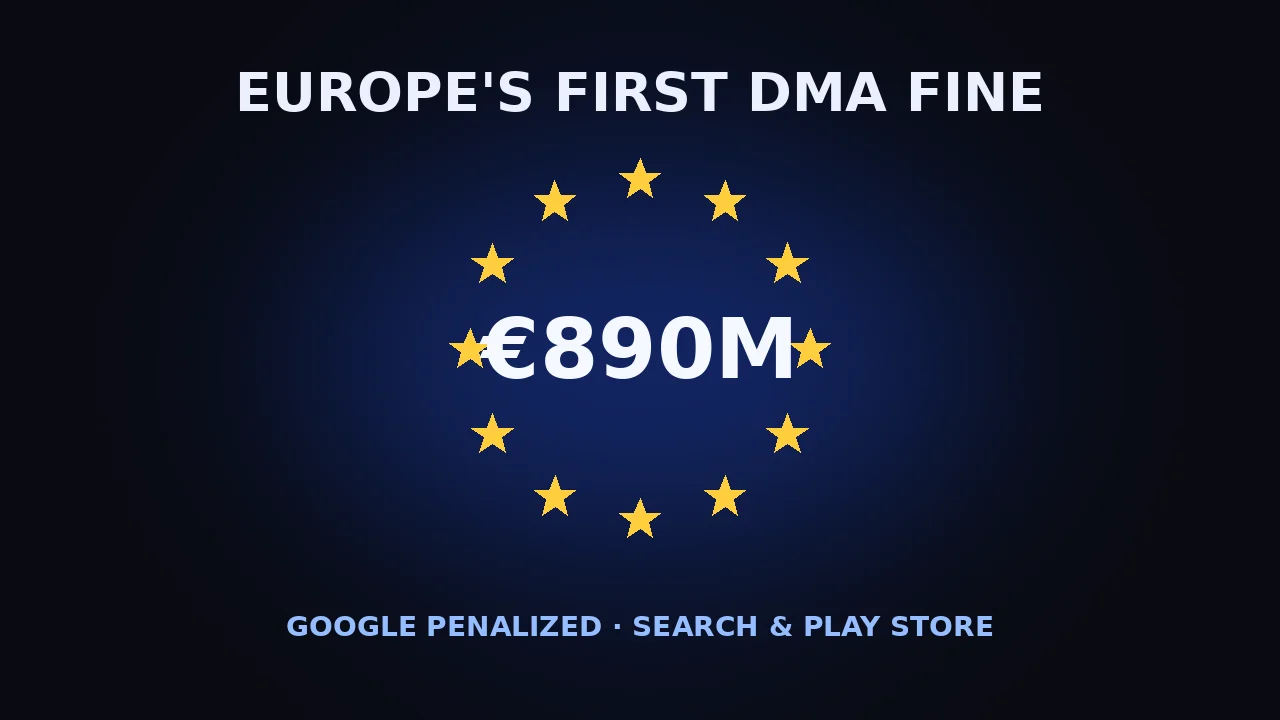
Four years after the Digital Markets Act entered into force, Brussels has used it to draw blood. The European Commission fined Google €890 million — about $1 billion — in the first financial penalties ever issued under the DMA, the sweeping law designed to constrain how digital "gatekeepers" treat competitors on their own platforms.
The fine splits into two violations. €460 million concerns self-preferencing: the Commission found Google promoted its own services — hotels, shopping, transport — in search results above those of rivals, the exact conduct the DMA was written to prohibit. The remaining €430 million targets Google Play: restrictions that prevented app developers from freely steering users toward offers and payment options outside Google's store, where its commission doesn't apply.
Why This Fine Is Different From the Last Ten
Google has absorbed larger European penalties before — including the €4.1 billion Android judgment that survived its final appeal this summer. But those fines arrived through classic antitrust litigation: cases that took a decade, ending in punishments for conduct long since modified. The DMA works on a different clock. It prescribes conduct up front, monitors compliance continuously, and fines quickly — with escalating penalties of up to 10% of global revenue for repeat violations, and 20% for serial ones.
That's what makes a "mere" $1 billion consequential. It isn't the end of a legal war; it's the first invoice in an ongoing compliance relationship — one where the regulator, not the courts, sets the tempo.
Google's Counter-Narrative
Google's response leaned into a argument it has been building all year: that DMA compliance actively degrades its products. To comply, the company says, it is "having to strip away real-time Search features Europeans love — like instant pricing and direct availability for hotels, flights and restaurants — and dismantle safety protections on Google Play." It's a message aimed at European consumers as much as regulators: your search results are getting worse, and Brussels is why.
Notably, the confrontation has a ceiling. The Commission acknowledged "good progress" in Google's compliance efforts, and reporting suggests the company is likely to avoid fresh fines in the near term — both sides describing the ongoing talks as constructive. Brussels wants behavioral change more than revenue; Google wants predictability more than victory.
The Global Ripple
The first DMA fine lands amid a widening transatlantic tech-regulation divide, with Washington increasingly framing European enforcement against American companies as a trade issue. Every major platform — Apple, Meta, Amazon, Microsoft — now knows the DMA's theoretical penalties are real, and every non-EU regulator drafting platform rules, from the UK to Japan to Brazil, just watched the template work. The gatekeeper era of tech regulation is no longer a proposal. As of this week, it has a price list.




































































Commenting is currently unavailable on this article.