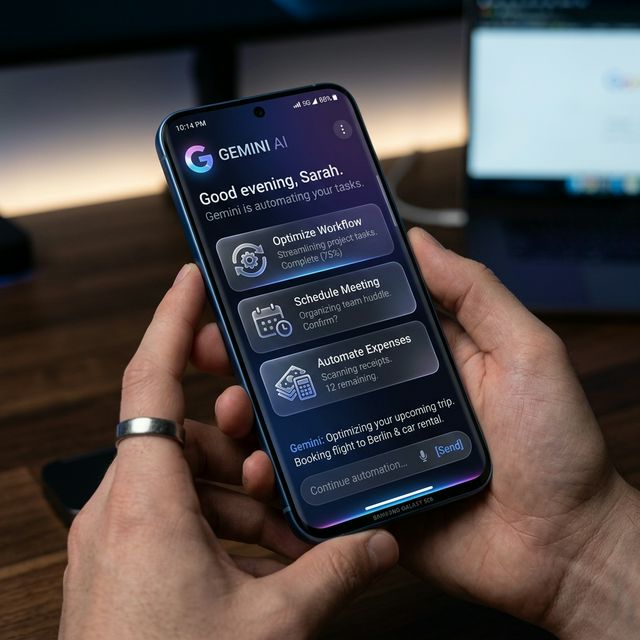
The Date Everyone Is Circling
If the reports hold, this Thursday, July 17, is when Google DeepMind ships Gemini 3.5 Pro — the company's answer to OpenAI's GPT-5.6 family and Anthropic's Fable 5. A caveat belongs at the top: Google has not officially confirmed the date. The July 17 target comes from multiple third-party reports and developer-community leaks, not from a Google model card, API changelog, or pricing page. Launch dates in this industry slip, and this one reportedly already has: earlier reporting suggested the extra weeks were used for a fresh pretraining run after Google scrapped the 2.5 Pro architecture for a full rebuild.
The Headline Spec: 2 Million Tokens
The most concrete claim across reports is a 2-million-token context window — double Gemini 2.5 Pro's cap and the largest production context of any major provider if it ships as described. In practical terms, 2M tokens means feeding the model roughly 1.5 million words in one conversation: an entire codebase, a stack of contracts, or years of correspondence, without chunking or retrieval tricks.
Context-window arms races have disappointed before — models often struggle to actually use the middle of very long inputs, a problem researchers call "lost in the middle." Whether Gemini 3.5 Pro genuinely reasons across all 2M tokens, rather than merely accepting them, is the first thing independent evaluators will test.
Deep Think: Paying for Reasoning
The second pillar is Deep Think, Google's extended inference-time reasoning mode. Like OpenAI's o-series approach, the model spends more compute cycles before answering, trading latency and cost for accuracy on hard math, logic, and multi-step planning problems. Reports suggest Deep Think may be gated behind Google's top-tier subscription — leaked API pricing in the $12–15 per million input tokens range and $36–45 output would put it firmly at the premium end of the market — though, again, none of this is confirmed.
Why It Matters Right Now
Google needs this launch. The competitive backdrop is unforgiving: OpenAI's GPT-5.6 tiers are rolling out to enterprises, Anthropic's models are winning developer mindshare, and Chinese labs continue shipping capable open-weight alternatives on aggressive timelines. Gemini's strongest card has always been integration — Search, Workspace, Android — and a rebuilt frontier model with the largest context window in production would give that ecosystem story genuine technical teeth.
What to Watch on Launch Day
Three things will separate a real leap from a spec-sheet victory: independent benchmark results on long-context retrieval, not just headline scores; actual Deep Think latency and cost in production; and whether autonomous workflow features — the model reportedly manages coding and tool-use tasks with minimal supervision — hold up outside curated demos. We'll cover the release, and the first real benchmarks, when they land.
Until Google publishes official documentation, treat every number above as reported rather than confirmed.






















































Commenting is currently unavailable on this article.