An Old Resource Problem With New Urgency
Disputes over shared rivers and aquifers are not new, but 2026 has seen several long-simmering cross-border water disagreements escalate in visibility, driven by a combination of population growth, agricultural demand, and shifting rainfall patterns that have made existing water-sharing agreements harder to honor in practice.
Where Tensions Have Sharpened Most
The most closely watched disputes involve countries sharing major river systems where upstream damming or diversion projects affect downstream agriculture and drinking water supply. These disagreements are rarely framed publicly as purely about water — they tend to surface alongside broader bilateral tensions — but water access is frequently the underlying, harder-to-resolve issue.
Why This Is Genuinely Different From Past Decades
Many existing water-sharing treaties were negotiated under rainfall and population assumptions that no longer hold, and renegotiating them is politically difficult because any new agreement almost necessarily means some party accepts a smaller effective share than they currently have. That structural mismatch — old treaties, changed conditions — is a big part of why these disputes have become harder to resolve through existing frameworks rather than easier.
The Connection to Food and Migration
Water scarcity in agriculturally dependent regions has downstream effects well beyond the water itself: reduced crop yields, rural economic stress, and in the most severe cases, contributing pressure toward internal and cross-border migration. Several development and security analysts have flagged water stress as an underappreciated contributing factor in regional instability, distinct from but often intertwined with more visible political conflicts.
What's Likely Ahead
Expect water-sharing renegotiation to become a more explicit item in regional diplomacy over the next several years, alongside continued investment in desalination and water efficiency technology as partial mitigations. Neither resolves the underlying scarcity, but both are likely to feature more prominently in how affected governments respond.
The Scale of the Problem
Approximately 2 billion people currently live in countries experiencing high water stress — defined as withdrawing more than 40% of available freshwater annually. The UN's 2026 Water Report projects that by 2030, global freshwater demand will exceed supply by 40%. The geography of water scarcity is highly uneven: the MENA (Middle East and North Africa) region has the highest water stress, with 12 of the 17 most water-stressed countries globally. Sub-Saharan Africa, Central Asia, and parts of South and Southeast Asia are also acutely affected.
The Active Geopolitical Flashpoints
The Nile Basin — Egypt, Ethiopia, and Sudan are in unresolved dispute over Ethiopia's Grand Ethiopian Renaissance Dam (GERD), which regulates Nile flow upstream of Egypt. Egypt has described water security as an "existential" issue and has not ruled out military action to protect downstream flow. No binding agreement has been reached despite years of AU-mediated negotiation.
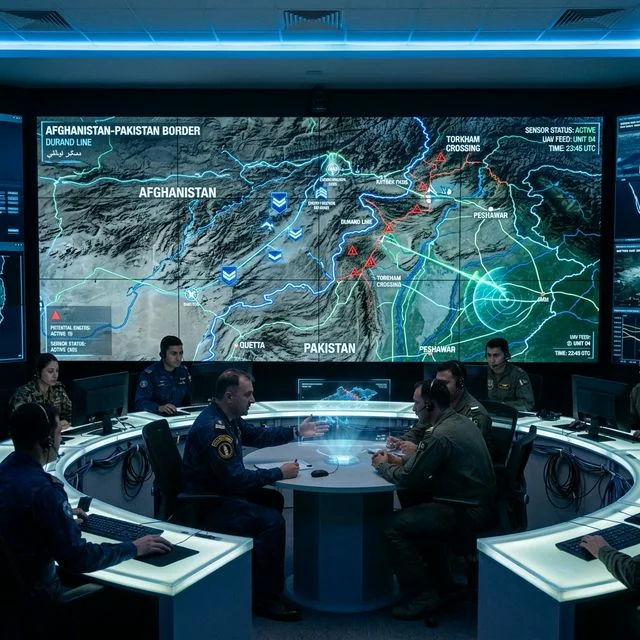
The Indus Basin — India and Pakistan share the Indus River system under the 1960 Indus Waters Treaty, one of the few diplomatic agreements that survived multiple wars between the countries. India's construction of hydroelectric projects in Jammu and Kashmir has generated Pakistani protests that the treaty is being violated. Tensions are elevated.
The Mekong — China's construction of 11 hydroelectric dams on the upper Mekong has significantly altered flow patterns downstream in Myanmar, Laos, Thailand, Cambodia, and Vietnam. Downstream countries have no treaty rights to upstream flow management, and China has declined to participate in formal Mekong Commission governance mechanisms on an equal footing with downstream states.
Technology as Partial Mitigation
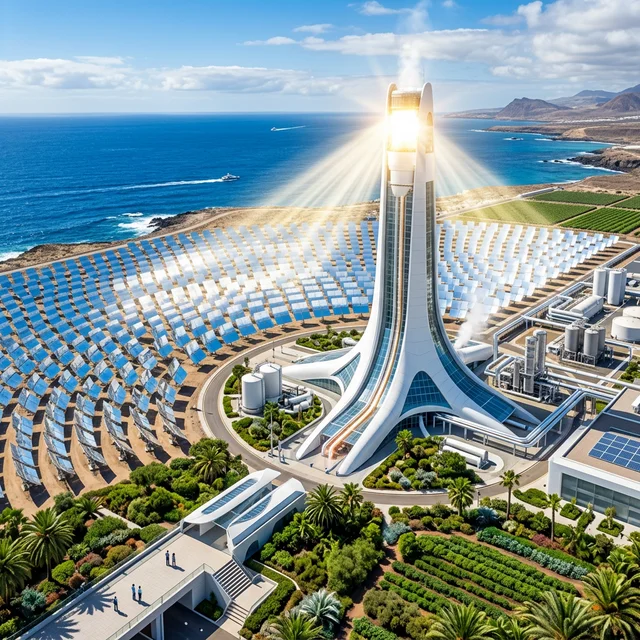
Desalination capacity is expanding rapidly, driven by cost reductions: the levelised cost of seawater reverse osmosis desalination has fallen from approximately $0.80/m³ in 2000 to $0.30–0.40/m³ today. Saudi Arabia, UAE, Israel, and Australia are major users. Israel now produces approximately 85% of its municipal water through desalination. The constraint is energy: desalination is energy-intensive, and plants powered by fossil fuels create a climate feedback loop.






























































Commenting is currently unavailable on this article.