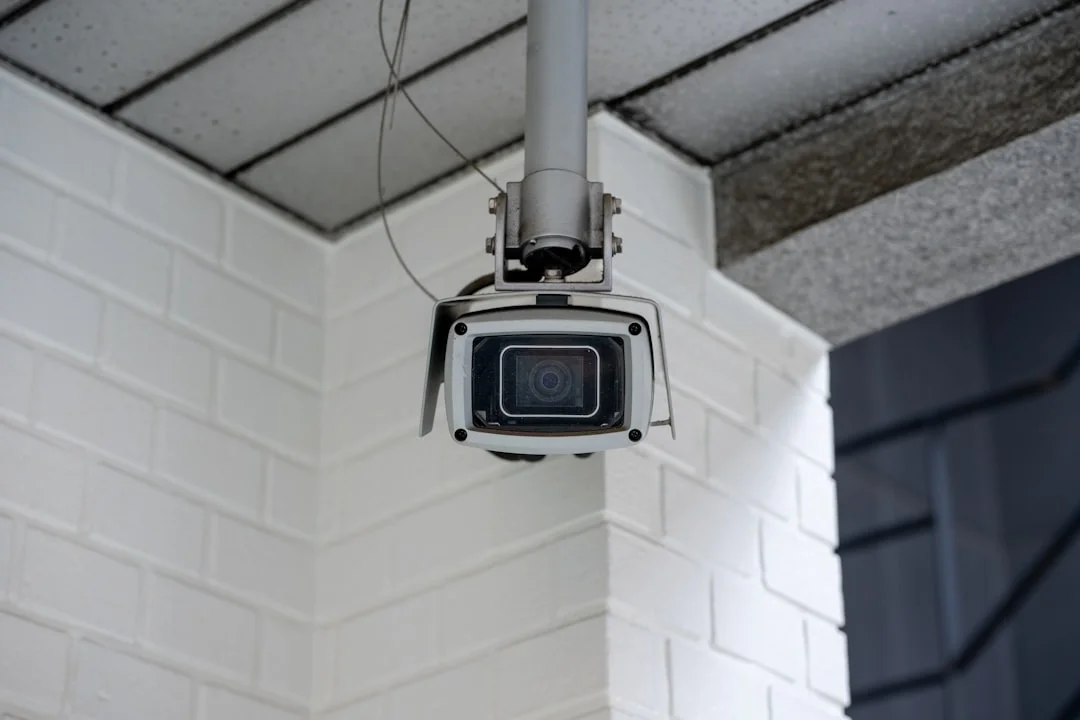
A New Era in Surveillance
In a groundbreaking development revealed today, AI-powered surveillance technology is set to transform crime prevention strategies globally. The unveiling of this technology at the International Security Conference in Geneva has sparked significant debate over its potential to drastically reduce crime rates and its implications on personal privacy.The Technology Behind the Breakthrough
At the heart of this innovation is a sophisticated AI system capable of analyzing vast amounts of data from surveillance cameras in real-time. Utilizing advanced machine learning algorithms, the system can identify suspicious behavior patterns and predict potential criminal activity before it occurs. Dr. Lena Carter, lead developer at SecureFuture Technologies, explained, "Our AI can process and cross-reference video data with real-time environmental and social factors to provide law enforcement with actionable insights, often before a crime happens."Success Stories and Challenges
Initial trials conducted in major cities such as New York, Tokyo, and London have shown promising results, with reported reductions in crime rates by up to 30%. New York City Police Commissioner, David Thompson, commented, "The predictive capabilities of this AI not only help us allocate resources more efficiently but also prevent crimes from happening in the first place, ensuring safer communities."However, this advancement is not without its challenges. Privacy advocates have raised concerns about the potential for misuse and the ethical implications of constant surveillance. "While we recognize the technology's potential benefits, we must not ignore the risks it poses to individual privacy," stated Sarah Nguyen, director of the Digital Rights Advocacy Group.
A Brief History of AI in Surveillance
The integration of AI in surveillance is not new. Over the past decade, AI technologies have been increasingly used to enhance security systems, from facial recognition software to automated alert systems. What sets this latest development apart is its predictive capability, a feature that marks a significant shift towards preemptive crime prevention.Implications for the Future
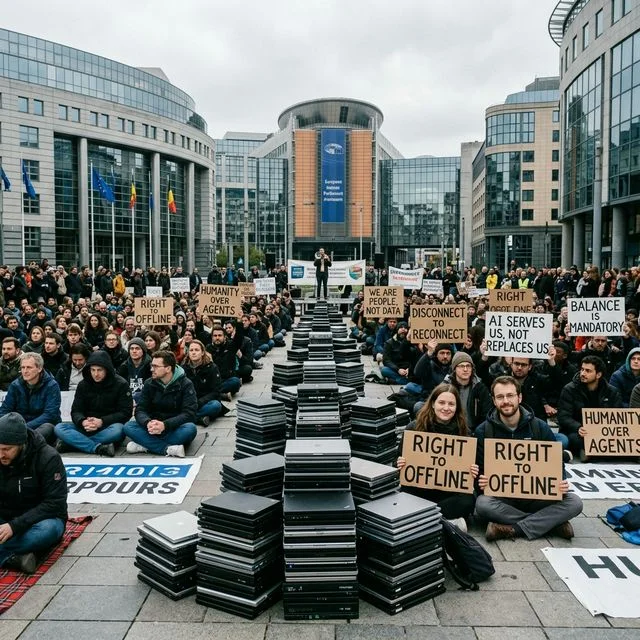
The introduction of this AI-powered surveillance system is poised to reshape the landscape of public safety globally. As governments and law enforcement agencies evaluate its adoption, the conversation around privacy rights and ethical governance is expected to intensify. If deployed responsibly, this technology could herald a new era of proactive crime prevention and community safety. However, finding the balance between security and privacy will be crucial to its success.As we stand on the brink of a new age in surveillance, the world watches closely to see how these technologies will be integrated into societal norms, and what this means for the future of privacy and security.
The Evidence Base for Crime Reduction
Proponents of AI surveillance cite several real deployments. Chicago's ShotSpotter system — which uses audio sensors and machine learning to detect gunshots and alert police in real time — has demonstrated measurable reductions in response times. Predictive policing systems in Los Angeles and Kansas City showed some early crime reduction results in pilot evaluations, though subsequent independent audits found significant false positive rates in predicted high-risk areas.
The UK's Metropolitan Police facial recognition deployments at public events have resulted in arrests that police attribute directly to the system. Independent audits have found accuracy rates above 85% in controlled conditions, lower in uncontrolled real-world settings with varied lighting and camera angles.
The Civil Liberties Counter-Evidence
Academic research on predictive policing has produced consistent findings that challenge the crime reduction narrative. A 2024 study across 17 US cities using predictive policing tools found no statistically significant reduction in overall crime rates, but did find a significant increase in enforcement activity in predominantly Black and Hispanic neighbourhoods — suggesting the systems amplify existing enforcement patterns rather than objectively predicting criminal behaviour.
Facial recognition accuracy drops significantly for people with darker skin tones, a finding consistently reproduced across independent audits since MIT's 2018 Gender Shades study. Systems with 85%+ accuracy overall may have 70% or lower accuracy for specific demographic groups, meaning a disproportionate share of misidentification falls on people who are already more likely to face discriminatory policing.
The Regulatory Divide
The EU AI Act (in force from 2024) classifies real-time biometric surveillance in public spaces as high-risk AI and restricts its use to specific narrow law enforcement exceptions. The United States has no equivalent federal framework, with individual cities making their own decisions — San Francisco banned facial recognition in 2019 (partially reversed in 2023); New York operates one of the largest surveillance camera networks in the world with no specific AI restrictions.

































































Commenting is currently unavailable on this article.