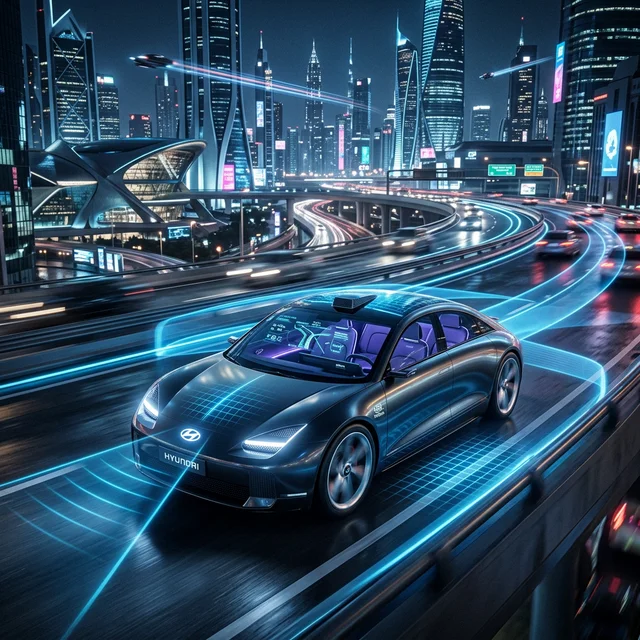
The Highway to Autonomy
Hyundai Motor Group and Kia have announced a massive expansion of their strategic partnership with Nvidia, aimed at bringing Level 4 Autonomous Driving to their global vehicle lineup by 2027. This isn't just about pilot programs; it's about a mass-market rollout of vehicles that can navigate complex urban environments with zero human intervention in specialized zones.
Deep Tech Integration
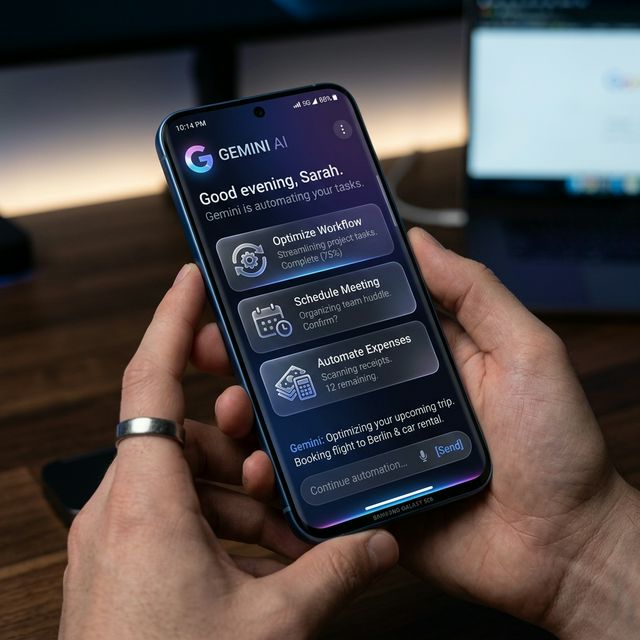
The core of the new system is the 'Drive-Orin' architecture, which will now feature deep integration with the upcoming Samsung Galaxy S26 and Google Pixel 10. This creates a unified mobile-to-auto 'Agentic Mesh.' Your phone's AI agent can now communicate directly with your car's autonomous kernel, allowing for seamless transitions from planning a trip on your device to the car executing the journey autonomously.
Safety and Sovereignty
Addressing privacy concerns, Hyundai emphasized that the autonomous decision-making happens 'at the edge' within the vehicle's local Nvidia chips. This ensure that your driving data never leaves the car, while still benefiting from real-time global traffic intelligence. As we look toward 2027, this partnership positions Hyundai as the primary competitor to Tesla's FSD in the race for mass-market autonomous dominance.
Safety Validation and Regulatory Approval
The path from strategic partnership announcement to mass-market Level 4 vehicles runs directly through a regulatory gauntlet that Hyundai and Nvidia are navigating in parallel across multiple jurisdictions. In the United States, NHTSA's Federal Automated Vehicles Policy framework requires extensive real-world testing data — typically hundreds of millions of miles across diverse conditions — before Level 4 operating authorisation can be granted for non-geofenced public roads. South Korea has taken a more proactive regulatory stance, establishing dedicated autonomous vehicle test zones and a provisional operating licence framework that Hyundai is leveraging for accelerated domestic validation.
Competitive Landscape
The Hyundai-Nvidia partnership enters a competitive field where Waymo (Alphabet), Cruise (GM), and BYD are all operating or testing Level 4 vehicles at meaningful scale. Nvidia's DRIVE platform is Hyundai's chosen foundation, but several competitors use in-house silicon — Tesla's FSD chip and Mobileye's EyeQ — which gives them direct control over the hardware-software integration. Nvidia's advantage is its ecosystem: the DRIVE platform supports a broader range of sensor configurations and has been validated across a larger number of vehicle platforms, making it an attractive choice for automakers that want to avoid the capital cost of proprietary chip development. The 2027 commercial target is aggressive but achievable for geofenced applications; broad urban deployment without geographic restrictions is more realistically a 2029–2031 timeline.
What the Hyundai-Nvidia Partnership Involves
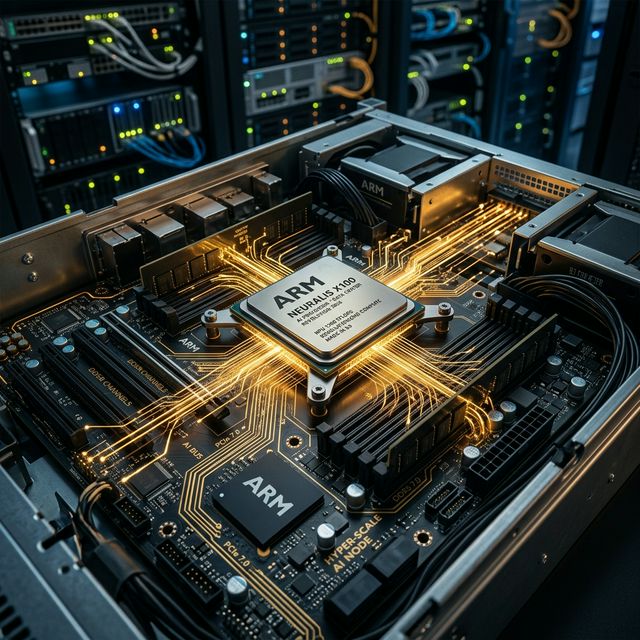
The partnership, announced in detail at CES 2026, involves three integrated programs. First, Hyundai's entire 2027 model-year vehicle lineup will incorporate Nvidia's DRIVE Thor system-on-chip for in-vehicle AI processing — handling driver monitoring, advanced driver assistance, and over-the-air update delivery for new AI models. Second, Hyundai will deploy Nvidia's Omniverse platform for its vehicle training simulation infrastructure, allowing it to run synthetic training scenarios at scale without requiring physical test miles. Third, Hyundai's robotaxi arm (previously Motional, the joint venture with Aptiv) will transition its autonomous stack from a custom internal system to an Nvidia DRIVE OS foundation.
Why Car Manufacturers Are Choosing Nvidia
The auto industry spent the early 2020s pursuing bespoke custom silicon approaches to autonomous driving (Tesla's Full Self-Driving chip, GM/Cruise's own compute platform, Waymo's custom training hardware). Several of those bets have proven expensive without delivering the performance advantages expected. Nvidia's DRIVE platform has now reached a scale where its development costs are amortised across dozens of automotive customers, giving it a price-performance advantage over any individual manufacturer's custom approach.
For Hyundai specifically, the Nvidia partnership provides access to a large ecosystem of third-party AI developers building on the DRIVE platform — reducing the internal R&D burden of building autonomous capabilities from scratch.
The Level 4 Timeline
Level 4 autonomy — a vehicle that can complete a defined journey without any human intervention, but within a defined geographic or operational domain (a geofenced area, specific weather conditions, mapped roads) — is achievable with current technology. Waymo is operating Level 4 robotaxis commercially in San Francisco and Phoenix. GM's Cruise has restarted its Level 4 programme after its 2023 incident.
The 2027 commercial target for Hyundai's Level 4 deployment is specifically for geofenced robotaxi services in South Korean cities where Hyundai has had testing programmes running since 2024. Full urban Level 5 (anywhere, any conditions) remains a research problem rather than an engineering problem for the entire industry.


















































Commenting is currently unavailable on this article.